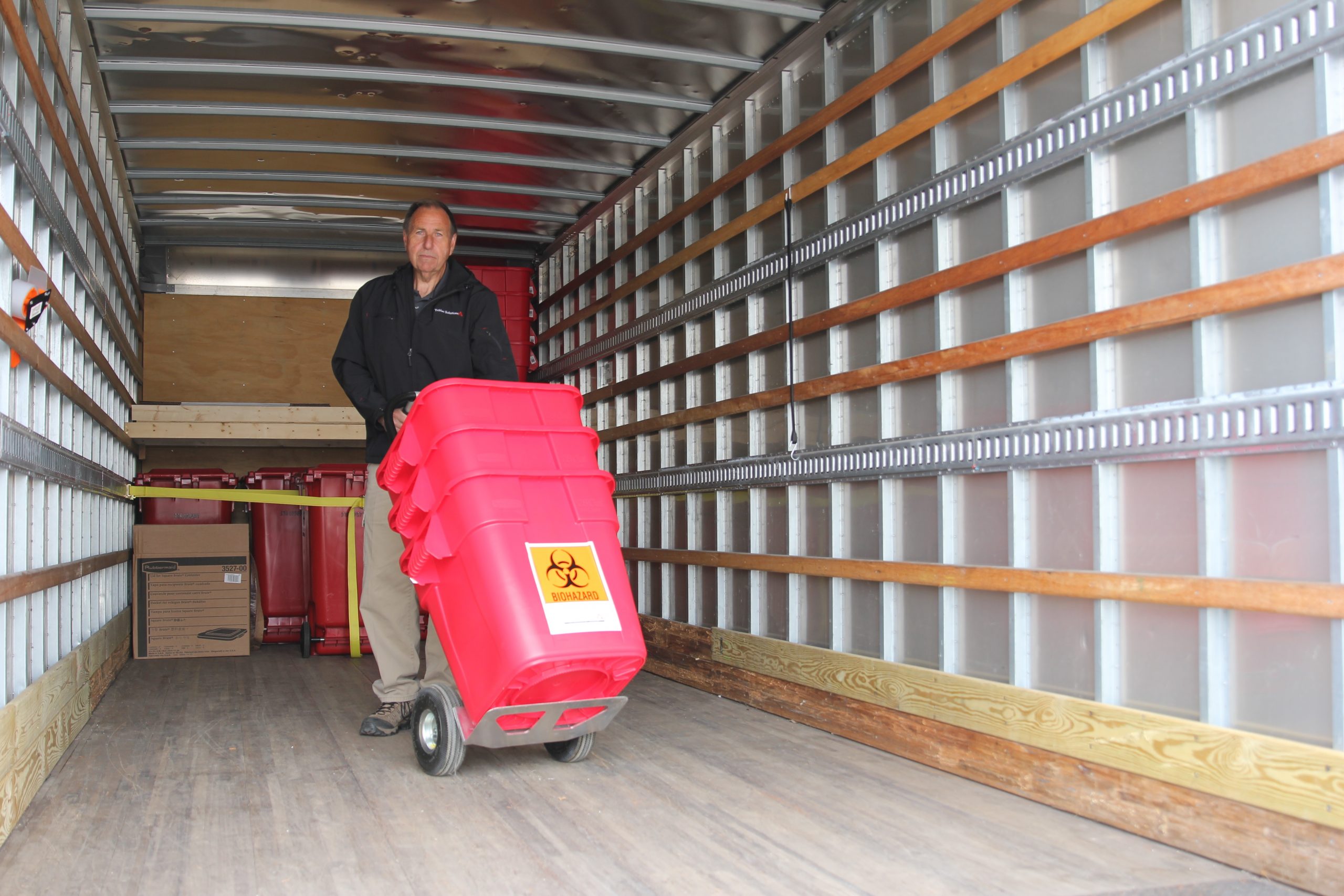
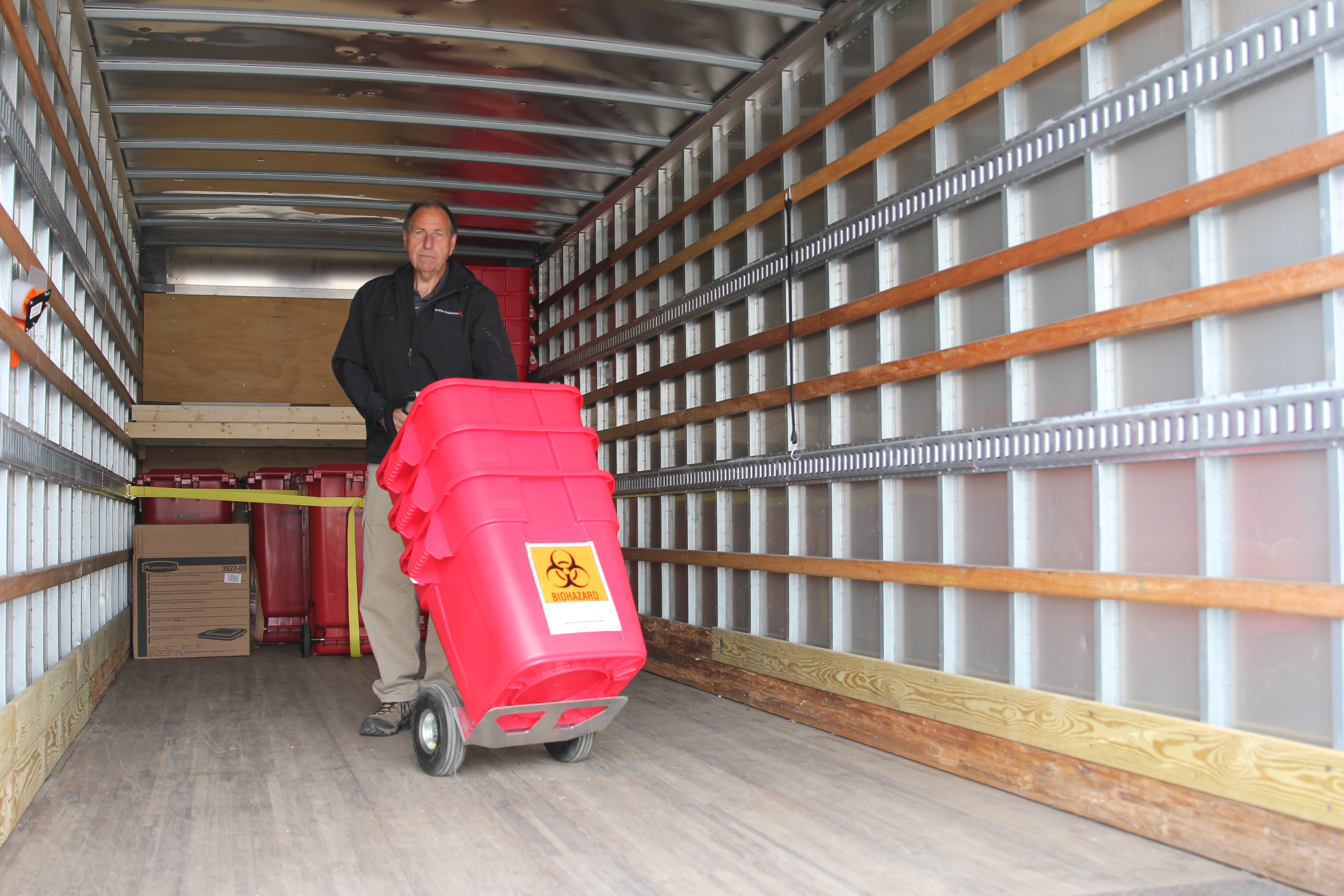
Transporting regulated medical waste is not just your hauler’s responsibility; it’s yours, too. Under DOT and EPA “cradle-to-grave” laws, your medical facility is liable for your waste from the moment it’s generated until it’s fully treated and destroyed.
That means if your waste provider fails to transport or dispose of it properly, you’re still on the hook.
To avoid compliance violations, penalties, or lawsuits, every medical office must understand the key transportation rules and required permits that apply under federal (DOT, EPA) and state (ADEM) regulations.
Here’s how to stay compliant.
DOT Medical Waste Transportation Regulations: What You’re Responsible For
The U.S. Department of Transportation (DOT) regulates the transport of regulated medical waste (RMW) under the Hazardous Materials Transportation Act (HMTA) and 49 CFR Parts 171–180.
Here’s what your waste hauler must comply with, and what you need to verify:
DOT Requirements for Medical Waste Transport:
| Requirement | What It Means | Why It Matters |
|---|---|---|
| DOT Permit | Hauler must be registered as a hazardous materials transporter with the DOT | Without it, both the provider and your facility can be fined |
| Proper Packaging | Waste must be packaged in leak-proof, puncture-resistant containers per 49 CFR | Improper containers can lead to spills, injuries, and violations |
| Labeling & Marking | RMW containers must be labeled with biohazard symbols, DOT hazard class codes, and orientation arrows | Failure to comply = violation |
| Manifest Documentation | All waste movements must be documented with proper manifests | You’re liable for missing or inaccurate paperwork |
| Employee Hazmat Training | All employees involved in waste transport must be Hazmat trained every 3 years | If not, DOT can impose fines over $80,000 per violation |
What Does “Cradle-to-Grave” Waste Liability Mean?
The “cradle-to-grave” standard means your medical facility is legally responsible for the full life cycle of the waste — from generation to final treatment.
This includes:
Proper packaging and labeling
Secure transport with licensed carriers
Documentation and manifest tracking
Incineration or sterilization by a permitted treatment facility
Even if your provider cuts corners, you can still be fined if they’re caught transporting or disposing of medical waste illegally.
That’s why DOT regulations — and proper vendor vetting — matter so much.
Permits to Verify Before You Sign a Medical Waste Contract
Don’t just assume your hauler is compliant, ask for these permits and confirm them with the issuing agency if needed.
Mandatory Waste Transportation Permits:
State Medical Waste Transportation Permit
Issued by ADEM (Alabama Department of Environmental Management)
Authorizes transport of regulated medical waste.Hazardous Waste Transportation Permit
Required if the provider transports hazardous pharmaceuticals or other RCRA-listed waste.DOT Hazmat Registration
Must be current and valid under 49 CFR for any waste transported over public roads.EPA Regulated Waste Activity Notification
Waste hauler must be registered with the EPA for transporting hazardous waste categories.Pharmaceutical Waste Permit
Issued by the Alabama State Board of Pharmacy
Often overlooked — but required for transporting any pharmaceutical waste.Medical Waste Treatment Permit (If applicable)
If your hauler owns the treatment facility, ensure it’s permitted. If not, verify the downstream partner is licensed — and visit it if possible.
Why This Matters: Real Risks and Fines
The DOT and EPA have stepped up enforcement around improper medical waste transport and documentation.
Real Penalties Include:
Up to $93,000 per day, per violation (EPA civil penalties under RCRA)
DOT fines exceeding $80,000 per manifest error
Facility reclassification (e.g., from “small quantity” to “large quantity” generator)
Legal liability for environmental damage or public exposure
Even one mistake — like a missing permit or incorrect label — can trigger a federal investigation.
How to Stay Compliant (Even If You Use a Waste Provider)
Your provider’s non-compliance is still your liability. Here’s how to reduce risk:
Best Practices for Transport Compliance
✅ Verify all required permits before signing a contract
✅ Ask for DOT training certificates for hauler employees
✅ Conduct site audits of treatment facilities
✅ Retain signed manifests and certificates of destruction
✅ Maintain your own compliance checklist
✅ Bundle DOT training with OSHA/BBP training for staff
✅ Include transport checks in your quarterly compliance audits
Key Takeaways
DOT regulations under 49 CFR govern how medical waste must be packaged, labeled, and transported
Your medical office is responsible for waste from cradle to grave — including transport and treatment
Failure to verify your hauler’s permits and training can lead to massive fines
Use a compliance checklist and vendor audit process to protect your facility