
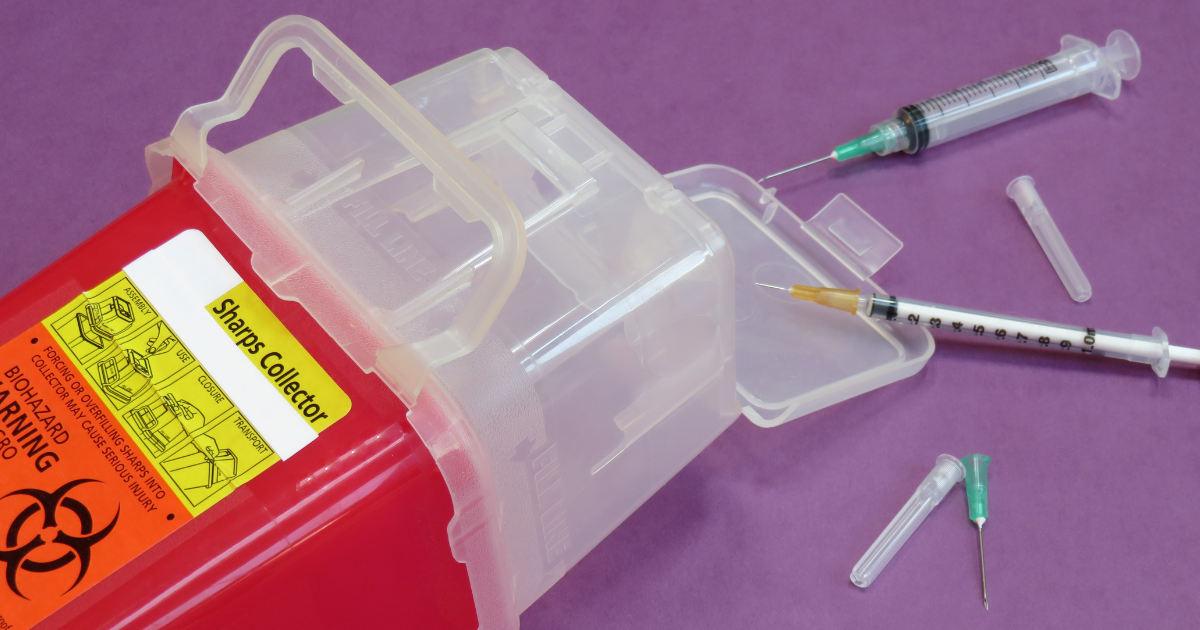
Sharps waste, a category of biomedical waste comprising objects with edges or points capable of cutting or puncturing skin (e.g., needles, syringes, and scalpel blades), poses significant health risks if not properly managed. At Trihaz Solutions, we prioritize safety and environmental sustainability in managing this hazardous waste. This blog delves into the life cycle of sharps waste, from generation to final disposal, underscoring the importance of meticulous handling at each step to mitigate health risks and environmental impact.
Generation and Segregation
The journey of sharps waste begins at the point of generation, primarily healthcare facilities like hospitals, clinics, and laboratories. Effective waste management starts with proper segregation at the source. Sharps must be immediately disposed of in FDA-approved containers that are puncture-resistant, leak-proof, and labeled or color-coded. This segregation not only ensures the safety of healthcare workers and patients but also facilitates the subsequent stages of the disposal process.
Collection and Transportation
Collected sharps waste undergoes a rigorous process to prepare for safe transportation. At Trihaz Solutions, we use specially designed containers and vehicles to prevent accidental exposure and environmental contamination. Our collection teams are trained in handling biomedical waste, ensuring that sharps are transported safely to treatment facilities without posing risks to public health or the environment.
How are Sharps Containers Destroyed?
Sharps waste, including needles, syringes, and other medical instruments, is typically destroyed through autoclaving or incineration. Autoclaving involves using pressurized steam to sterilize the waste, rendering it non-infectious before it’s compacted and disposed of in a landfill. Incineration, on the other hand, involves burning the waste at high temperatures to reduce it to ash, which is then disposed of safely. Both methods are designed to eliminate the risk of infection and injury from sharps waste, with incineration also significantly reducing the volume of waste. The choice between these methods depends on various factors, including environmental regulations, the type of waste, and available facilities.
Final Disposal
After treatment, the neutralized waste is transported to a landfill or other designated disposal site. Incinerated waste, reduced to ash, occupies significantly less space, minimizing its footprint in landfills. Some materials recovered from the incineration process, such as metals, can be recycled, further reducing the environmental impact.
Regulatory Compliance and Documentation
Throughout its journey, sharps waste management adheres to strict regulations and guidelines to ensure environmental protection and public health safety. At Trihaz Solutions, we maintain comprehensive documentation for each step of the process, from collection to final disposal, ensuring regulatory compliance and providing peace of mind to our clients.
When Should Sharp Containers be Emptied
Sharp containers should be emptied or replaced before they are fully packed to minimize the risk of needle-stick injuries, typically when contents reach about three-quarters full or the indicated fill line. This guideline ensures a safety margin is maintained to prevent overfilling. The exact timing can vary based on the container’s use rate and local regulations, which may dictate specific requirements for handling and disposal. In both medical settings and personal use, it’s essential to regularly monitor the fill level of sharps containers and adhere to safety protocols for disposal to ensure a safe environment for everyone involved.
Are Sharps Needles Recycled?
Sharps needles, due to their potential to carry infectious agents, are generally not recycled in the traditional sense that consumer plastics or metals might be. The primary focus with sharps waste management is on sterilization and safe disposal to prevent injury and disease transmission. After treatment through autoclaving or incineration, as previously mentioned, the materials are not repurposed or reused for new products, especially in the case of medical sharps.
What Happens to Sharps Waste?
The management of sharps waste is a critical component of healthcare waste management, requiring specialized knowledge and processes to ensure safe and environmentally responsible disposal. At Trihaz Solutions, we are committed to providing expert services that meet the highest standards of safety, compliance, and environmental stewardship. By understanding the journey of sharps waste, healthcare providers and the public can appreciate the importance of proper disposal practices and their role in protecting health and the environment.