
Every day, thousands of healthcare and industrial professionals face the hidden hazards of bloodborne pathogens and other potentially infectious materials (OPIM). Safeguarding both employees and the communities they serve demands more than common sense—it requires unwavering adherence to a robust framework of federal standards. In this definitive guide, we’ll unravel the complexities of OSHA-compliant management of bloodborne pathogens and OPIM, highlighting not just the rules but their crucial roles in protecting lives, reputations, and operational continuity.
What exactly are OPIM and bloodborne pathogens? How do federal regulations shape the way employers must act? Why does compliance matter so deeply—beyond avoiding costly citations? And, how does a partner like TriHaz Solutions make a difference across healthcare and industry? We’ll answer these questions and more, equipping you with the clarity and resources needed for true safety and compliance.
According to the Bloodborne Pathogens Standard – OSHA, every employer with occupational exposure to blood or OPIM must implement rigorous safeguards. For TriHaz Solutions and its clients, “compliance” isn’t just a box to check—it’s the foundation of trust and care that keeps people safe, operations smooth, and communities confident.
In the sections ahead, we’ll demystify essential terms, clarify regulatory pillars, spotlight practical best practices, and show how safety culture isn’t just an aspiration but an achievable reality.
Let’s start by understanding the very substances and organisms at the core of these standards.
What is OPIM?
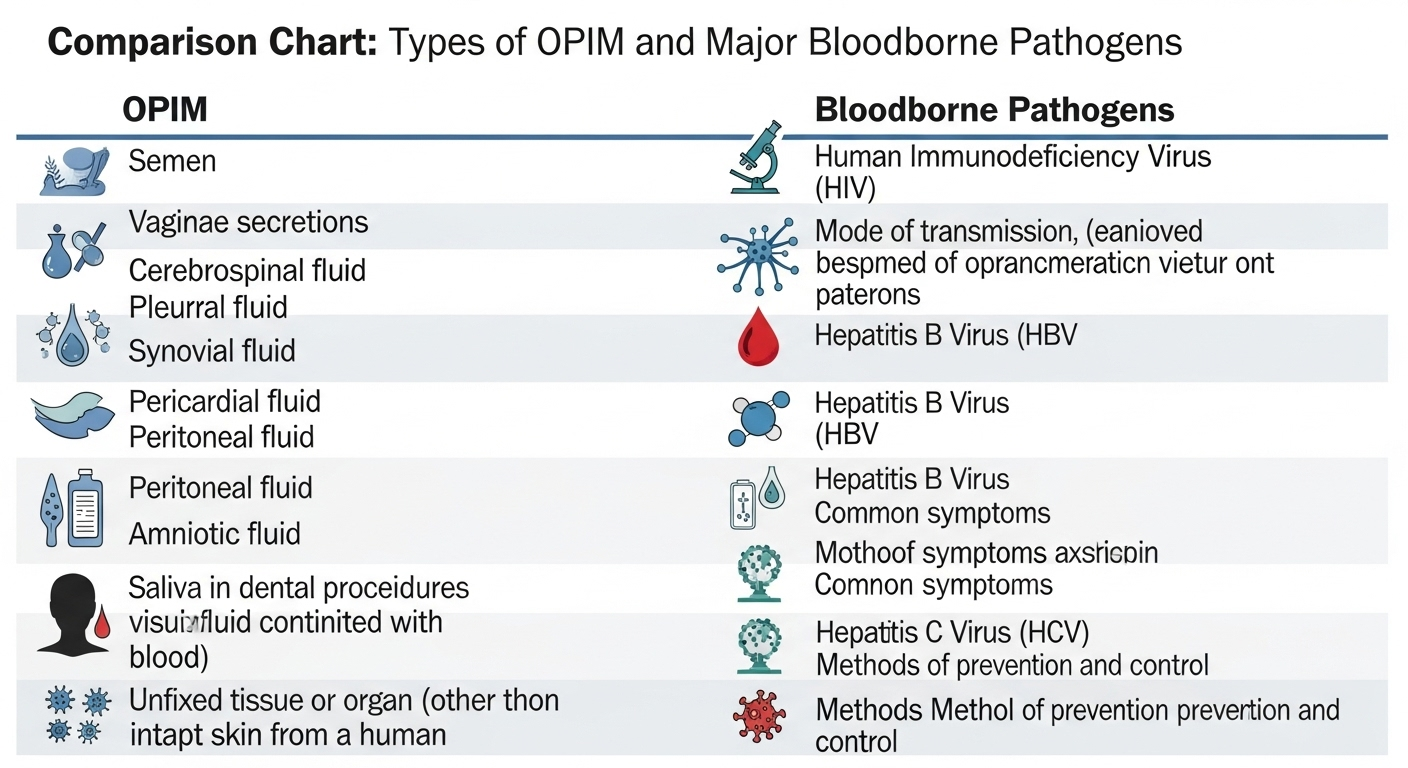
OPIM stands for “Other Potentially Infectious Materials.” While blood is the most commonly recognized vehicle for infectious exposure, OSHA’s Bloodborne Pathogens Standard identifies a spectrum of other substances capable of transmitting disease. OPIM includes:
- Semen
- Vaginal secretions
- Cerebrospinal fluid (CSF)
- Synovial fluid (from joints)
- Pleural, pericardial, and peritoneal fluids
- Amniotic fluid
- Saliva in dental procedures
- Any body fluid visibly contaminated with blood
These designations ensure policies capture a full range of hazards, not just the obvious ones.
Recognizing Bloodborne Pathogens
Bloodborne pathogens are infectious microorganisms present in blood and certain other body fluids. The most significant threats include:
- HIV (Human Immunodeficiency Virus): Causes AIDS, transmitted via blood and certain OPIM.
- HBV (Hepatitis B Virus): Impacts the liver; persistent on surfaces for days and highly infectious.
- HCV (Hepatitis C Virus): Another liver-affecting virus with chronic health impacts and silent transmission.
Other examples include malaria, syphilis, and viral hemorrhagic fevers. Every workplace policy must account for these threats’ diverse symptoms, transmission vectors, and post-exposure consequences.
“You can’t see the threat—but that doesn’t diminish its danger. Every drop, every surface, could change a life.” — Anonymous Infection Control Nurse
The Stakes of Occupational Exposure
Occupational exposure is any reasonably anticipated skin, eye, mucous membrane, or parenteral (needlestick, cut) contact with blood or OPIM that may result from job duties. This isn’t just a theoretical risk: according to OSHA Hazard Recognition, accidental exposures occur daily in U.S. workplaces. Consequences range from temporary illness to chronic disease, disability, or even death.
Regulatory Distinctions That Matter
Why does OSHA distinguish between bloodborne pathogens and OPIM? The specificity underscores a philosophy: safety plans must be comprehensive. Any gap—any overlooked substance or transmission route—endangers everyone.
By defining these terms, OSHA empowers organizations to build airtight exposure control plans that address all real-world risks—not just the most visible ones.
With these foundational definitions in hand, let’s explore how OSHA transforms them from guidelines into actionable standards.
OSHA Bloodborne Pathogens Standard
A patchwork approach is not enough. OSHA’s Bloodborne Pathogens Standard (29 CFR 1910.1030) is the gold standard for workplace infection control, relevant for large hospitals, small dental offices, bustling manufacturing plants, and everywhere in between. But what does “compliance” actually require?
The Written Exposure Control Plan (ECP)
Every covered employer must develop a tailored, written Exposure Control Plan (ECP). This plan:
- Details all tasks and job classifications where exposure risk exists
- Explains the schedule and methods for implementing each required protective measure
- Is reviewed and updated annually, accounting for changes in technology, work processes, or regulations
- Must be readily accessible to employees (not locked away in a supervisor’s office)
Picture this plan as the “Owner’s Manual” for keeping people safe—a living document that evolves with the risks.
Engineering and Work Practice Controls
OSHA prioritizes eliminating hazards at their source. This means:
- Engineering controls: Sharps disposal containers, self-sheathing needles, splash guards
- Work practice controls: Handwashing routines, strict no-recapping policies, immediate disposal of contaminated materials
Every tool and routine is scrutinized—not just by auditors but by teams dedicated to sending every worker home healthy, every day.
The Vital Role of Personal Protective Equipment (PPE)
Employers must provide, maintain, and enforce the use of PPE:
- Gloves, gowns, masks, eye protection, face shields—all tailored to the anticipated level of exposure
- PPE must be provided at no cost
- Protocols for safe removal and disposal are part of the equation
Hepatitis B Vaccination and Recordkeeping
Employers must offer the Hepatitis B vaccine series—free, within 10 days of assignment—to workers at risk. It’s not just a suggestion; it’s a required shield against a potentially life-altering disease. Detailed medical and vaccination records (confidentially maintained) provide both accountability and peace of mind.
Employee Training—A Recurring Commitment
No one is born knowing how to protect themselves from bloodborne hazards. OSHA demands:
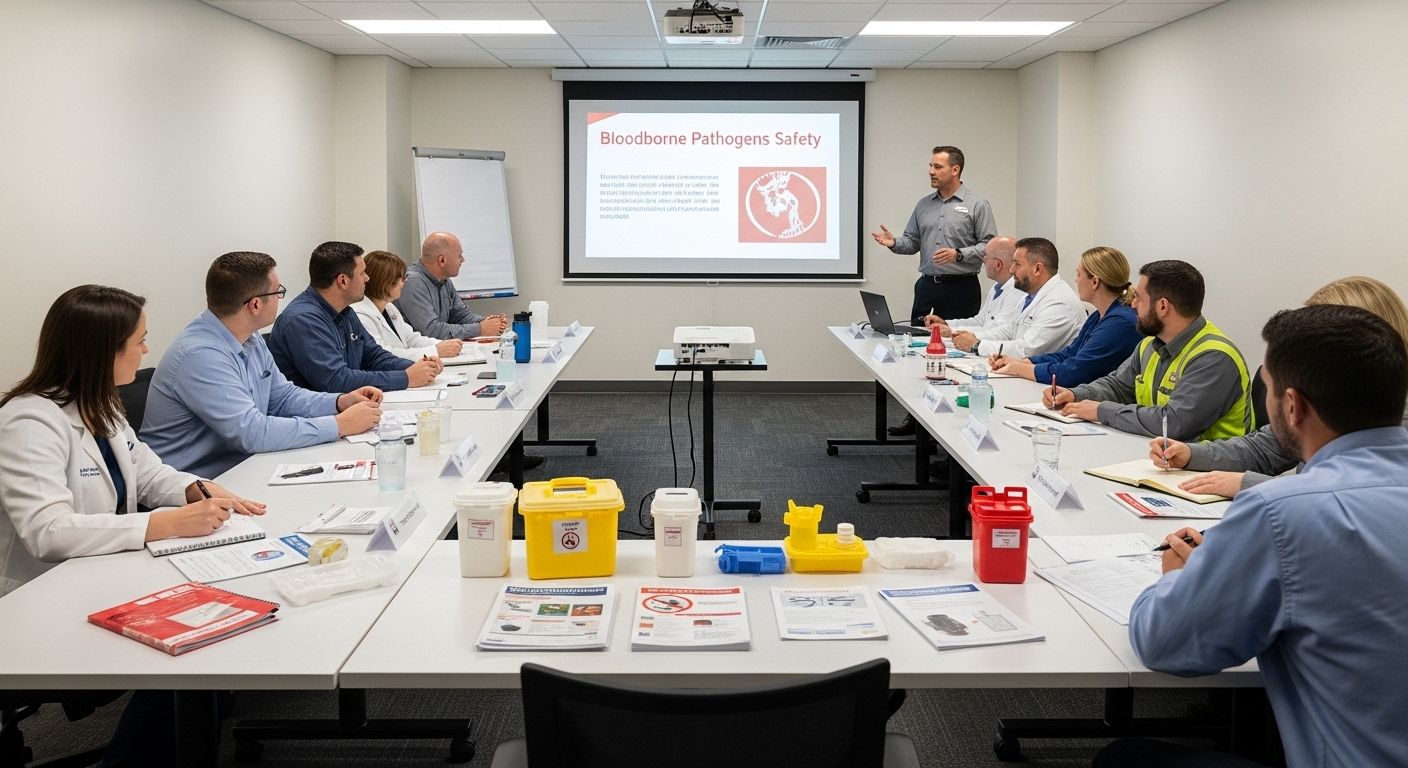
- Comprehensive initial training for every exposed employee
- Annual follow-ups (or whenever new risks emerge)
- Accessible, understandable materials—no “checkbox” content allowed
According to OSHA’s Bloodborne Pathogens Standard and Healthcare Standards, this investment in education is non-negotiable. It empowers people with the confidence and competence to do their jobs safely.
Every element of this standard—documentation, devices, PPE, vaccines, education—works in concert. A failure in one is a risk for all. Next, we’ll dive into the sector-by-sector realities that shape how these principles are put into practice.
Industry-Specific Implications and Best Practices
The paths to compliance are as varied as the industries and workplaces OSHA covers. What keeps a busy hospital safe isn’t always the same protocol used in a remote industrial plant or transportation hub. Understanding these nuances—and learning from both successes and missteps—prepares organizations to meet standards with efficiency and confidence.
Healthcare Sector
Hospitals, dental clinics, and laboratories each face unique exposure risks. Consider:
- Central sterile supply: Frequent hand-offs of contaminated surgical instruments make rigorous container management and chain-of-custody procedures vital.
- Pathology labs: Specimens in transit can leak or break—demanding robust containment, labeling, and immediate response protocols.
- Housekeeping: Workers cleaning patient rooms or clinical labs may encounter needles or blood-contaminated linen where they least expect it. Training for hazard recognition and safe handling is essential.
Non-Healthcare Settings
Industrial facilities, transportation companies, and emergency response teams may assume they’re “low risk,” but experience tells another story:
- Manufacturing maintenance crews can encounter blood during machinery accidents.
- Public transit workers face risks from improperly disposed sharps or human waste.
- Housekeeping in schools or office buildings can stumble upon biohazards.
Each setting demands a custom protocol. According to Healthcare Standards – OSHA, citation records show that neglect often arises from “it won’t happen here” thinking. The lesson: Risk may be rare, but preparation must be routine.
Real-World Lessons
Consider the 2019 citation of a midsize manufacturer, where lack of an Exposure Control Plan and untrained staff led to a costly and highly publicized OSHA violation after a needlestick incident. The aftermath included not just financial penalties but shaken morale and reputation.
Conversely, proactive facilities regularly review SOPs and invest in staff engagement. Their safety records, audit histories, and public trust soar in tandem.
Flexible Solutions for Unique Challenges
No one-size-fits-all solution exists. TriHaz Solutions provides responsive waste management innovations, ensuring protocols evolve alongside new risks, technologies, or regulatory changes. Their adaptability helps clients stay ahead of both hazards and inspectors.

Why You Should Know About OPIM
In the world of OPIM and bloodborne pathogen management, excellence is never accidental. It is the outcome of diligent planning, rigorous implementation, and unwavering commitment to people’s safety. OSHA’s detailed requirements aren’t mere legal hurdles—they are the foundations of trust, operational stability, and peace of mind for both employees and the communities they serve.
At TriHaz Solutions, we are more than compliance facilitators. We’re partners, educators, and advocates for workplace safety. By proactively managing hazards, evolving procedures, and empowering every employee, we help organizations not just meet, but exceed, industry expectations.
If navigating complex regulations feels daunting, remember that you don’t have to chart the course alone. Engaging experienced partners frees up your team to focus on care, service, and innovation—knowing your compliance backbone is strong, up-to-date, and fully auditable.
For a deeper partnership in safety and compliance, TriHaz Solutions stands ready as your trusted ally. The next step is simple—and critical for your peace of mind.
Take the Next Step with TriHaz Solutions
Your team’s safety and compliance record are too important to leave to chance. Contact TriHaz Solutions today for a customized, OSHA-compliant waste management consultation. With unmatched experience, local service touch, and a dedication to sustainable, worry-free solutions, you can rest assured your people and your business are protected.