
As 2025 wraps up, practice managers are juggling staffing, budgets, insurance renewals, and operational planning for 2026. But one area that can’t slip to the bottom of the list—because regulators, accreditation bodies, and insurers watch it closely—is medical waste management.
Year-end is the perfect time to tighten up compliance, reduce risk, and ensure you’re not overpaying or exposing the practice to preventable violations.
Here are the top medical waste priorities every practice manager should focus on before the year ends.
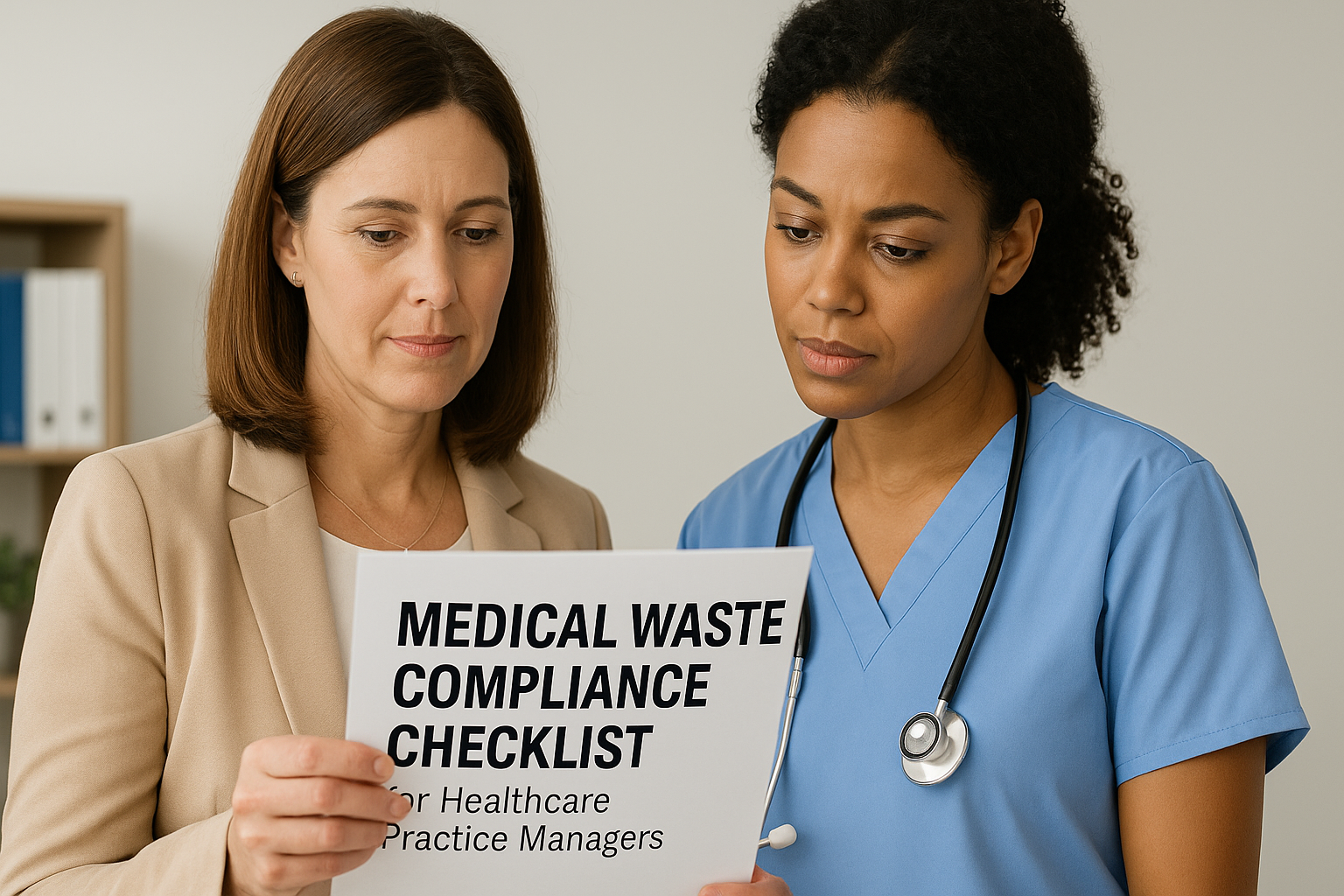
Medical Waste Management Checklist
Review Your Medical Waste Management Plan
Most states—including Alabama and Tennessee—require a written Medical Waste Management Plan. Year-end is ideal for confirming that your plan:
- Is updated for 2025 regulatory changes (including ADEM Division 17 revisions and TDEC updates)
- Reflects current staff roles and responsibilities
- Includes your training protocols, storage limits, container procedures, and emergency response steps
- Matches what’s happening in real daily operations
If your plan is outdated, auditors will treat it as if you don’t have one.
Audit Your Waste Segregation Practices
Improper segregation is the #1 cause of fines for outpatient practices.
As 2025 ends, double-check:
- Red-bag waste is only used for biohazardous waste
- Sharps are never placed in red bags
- Pharmaceuticals are separated into hazardous, non-hazardous, and controlled waste streams
- Solid waste (trash) is not thrown into medical waste containers
- No “double bag everything” rules are floating around (a common staff myth)
If waste segregation isn’t correct, you’re either at risk of citations—or overpaying.
Verify Storage Time Limits & Pickup Frequency
State rules often cap how long untreated medical waste can be stored.
Examples:
- Alabama: Storage time limits for generators (depending on temperature and requirements in your management plan)
- Tennessee: Requirements tied to “special waste” and solid waste rules
As staffing fluctuates during the holidays, many small practices experience missed pickups or overflowing containers—two inspection triggers.
Year-end is ideal for confirming:
- Pickup frequency actually matches your volume
- Containers are staying closed, labeled, and protected
- Storage rooms are clean, ventilated, and compliant
Reconcile Manifests and Certificates of Destruction
Documentation is one of the strongest themes of 2025—and will only grow in 2026.
Practice managers should:
- Ensure every pickup has a signed manifest
- Verify Certificates of Destruction are reconciled and stored
- Keep digital backups in one place
- Confirm your hauler treats waste with an ADEM/TDEC permitted facility
- Prepare documentation for potential insurance or regulatory audits in Q1
This is also the biggest risk area if your hauler ever has compliance issues.
Check & Document Staff Training
Training is a critical requirement under OSHA–Bloodborne Pathogens Standard (BBP), DOT (hazmat training for anyone signing shipping papers), and state rules.
Before year-end, ensure:
- Every staff member has up-to-date BBP training
- Anyone packaging or signing for medical waste has DOT compliant training
- Training logs are complete
- New hires onboarded in Q3–Q4 are included
Verbal training does not count. Documentation is everything going into 2026.
Evaluate Your Vendor’s Reliability and Compliance
Ask yourself:
- Has our hauler missed pickups?
- Do they provide easy access to documentation?
- Are they locally responsive—or a national call center?
- Is the treatment facility close?
- Are they following the 2025 regulatory updates?
With enforcement actions up (including denials of new Alabama treatment facilities and heightened scrutiny in TN), vendor oversight is now a core compliance responsibility.
Plan Your 2026 Budget Based on Actual Waste Volume
Year-end volume reviews often show:
- Over-service (too many pickups)
- Under-service (risk of overflow)
- Container sizes that don’t match actual use
- Opportunities to switch to reusable sharps or adjust pharmacy waste categories
Correcting this before 2026 can reduce waste spending by 10–30% for many practices.
How TriHaz Helps Practice Managers End the Year Strong
TriHaz supports practices across Alabama, Tennessee, and the Southeast with:
- Local treatment (shorter chain of custody, faster documentation)
- Right-sized pickup schedules to avoid overflows and unnecessary costs
- Reusable sharps programs to improve safety and predictability
- Compliance training for OSHA/DOT requirements
- Easy access to manifests and Certificates of Destruction
- Updated Medical Waste Management Plan templates
- Real people–local support when you need to add, change, or troublshoot a pickup
If you’re unsure where to start, don’t worry—we walk you through it.
Need a quick year-end compliance check?
TriHaz is offering free medical-waste compliance reviews for practices preparing for 2026.
We’ll review your:
- Segregation
- Documentation
- Waste plan
- Pickup frequency
- Vendor compliance
- Training
- Storage setup
Get peace of mind before the new year.