
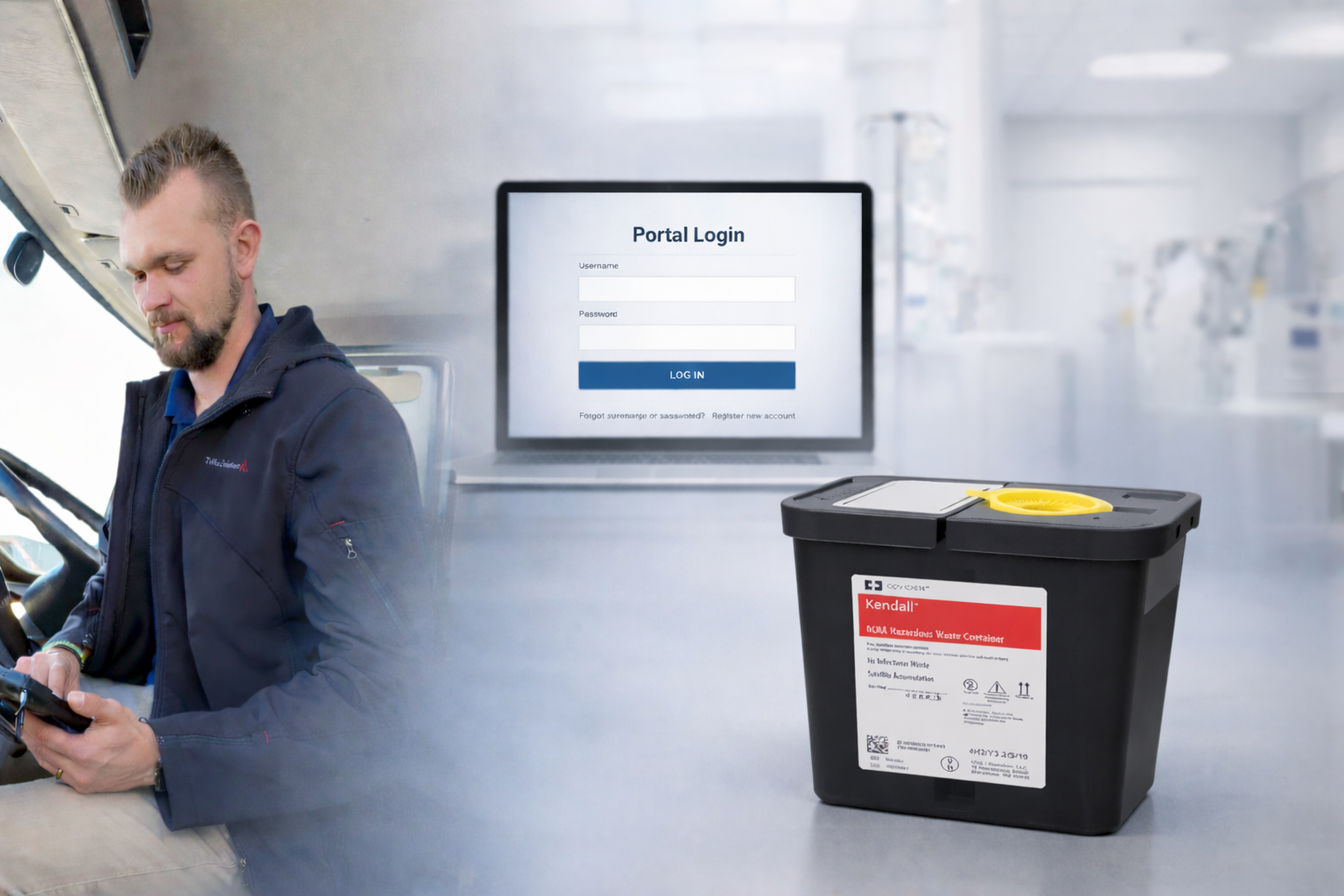
In the complex world of medical and hazardous waste, staying compliant is a moving target. The Environmental Protection Agency (EPA) has reached a critical milestone in its transition to a digital-first oversight model. This includes new rules around EPA e-Manifest compliance.
The “Third Rule,” which governs the e-Manifest system, is now fully in effect, fundamentally changing how healthcare facilities, laboratories, and waste generators handle their documentation.
The Current Status of e-Manifest (2026)
The EPA’s goal is clear: 100% digital tracking. While paper manifests aren’t entirely extinct yet, the agency has made them increasingly difficult and expensive to use.
- The “Third Rule” is Fully Enforced: As of December 1, 2025, several critical reports, including Exception Reports, Discrepancy Reports, and Unmanifested Waste Reports, must be submitted electronically via the RCRAInfo portal. Paper mail-ins for these specific reports are no longer accepted.
- The 4-Copy Form Transition: The traditional 5-copy paper manifest has been replaced by a streamlined 4-copy form. The “Designated Facility Copy” is now obsolete because the digital system handles that notification.
- Higher Fees for Paper: To incentivize the switch, the EPA continues to adjust user fees. For the 2026–2027 fiscal cycle, submitting a paper-based manifest (scanned image) costs significantly more than a fully electronic one ($22.00 vs. $6.00).
- Sunset Planning: The EPA is currently establishing the timeline to sunset paper manifests entirely, signaling that the window for physical record-keeping is closing.
Compliance for Medical Waste Generators
For facilities generating hazardous medical waste (such as certain chemotherapy agents, high-concentration Pathological waste, or hazardous pharmaceuticals), the following actions are now mandatory:
- Mandatory Registration (SQGs & LQGs)
If your facility is a Small Quantity Generator (SQG) or Large Quantity Generator (LQG), you are required to register and maintain an account in the RCRAInfo system. You must have at least one (ideally two) “Site Managers” authorized to sign and certify manifests electronically. - Digital Record Reconciliation Even if you still use a “Hybrid” manifest (starting on paper and ending digitally), you are responsible for ensuring the final, signed manifest appears in your e-Manifest account. Under the new rules, TSDFs (Treatment, Storage, and Disposal Facilities) are no longer required to mail you a paper copy of the completed manifest. The digital record in e-Manifest is now your legal record.
- Electronic Exception Reporting If you do not receive confirmation that your hazardous waste reached its destination within the allotted timeframe (now 60 days for both LQGs and SQGs to align with the new rule), you must file an Exception Report electronically through RCRAInfo.
- 2026 Biennial Reporting The deadline for the 2026 Biennial Hazardous Waste Report is March 1, 2026. Because the e-Manifest system now integrates directly with this report, any data gaps in your electronic portal could lead to non-compliance or significant delays in filing.
How TriHaz Solutions Simplifies Compliance
Navigating the RCRAInfo portal and keeping track of varying state requirements can be a full-time job. TriHaz Solutions acts as your compliance partner to remove the administrative burden:
- RCRAInfo Registration Support: We help your facility set up its EPA ID and register the necessary Site Managers, ensuring you have the right permissions to sign and view manifests.
- System Integration: TriHaz utilizes the e-Manifest system to ensure all waste shipments are properly logged, reducing the risk of “unmatched” manifests that trigger audits.
- Cost Reduction: By helping your facility transition from paper-heavy processes to fully electronic manifests, we help you avoid the higher EPA “paper processing” fees.
- Biennial Report Preparation: We provide the data and reconciliation support needed to make the March 1, 2026, reporting deadline a seamless process.
Is your facility ready for the 2026 reporting season?