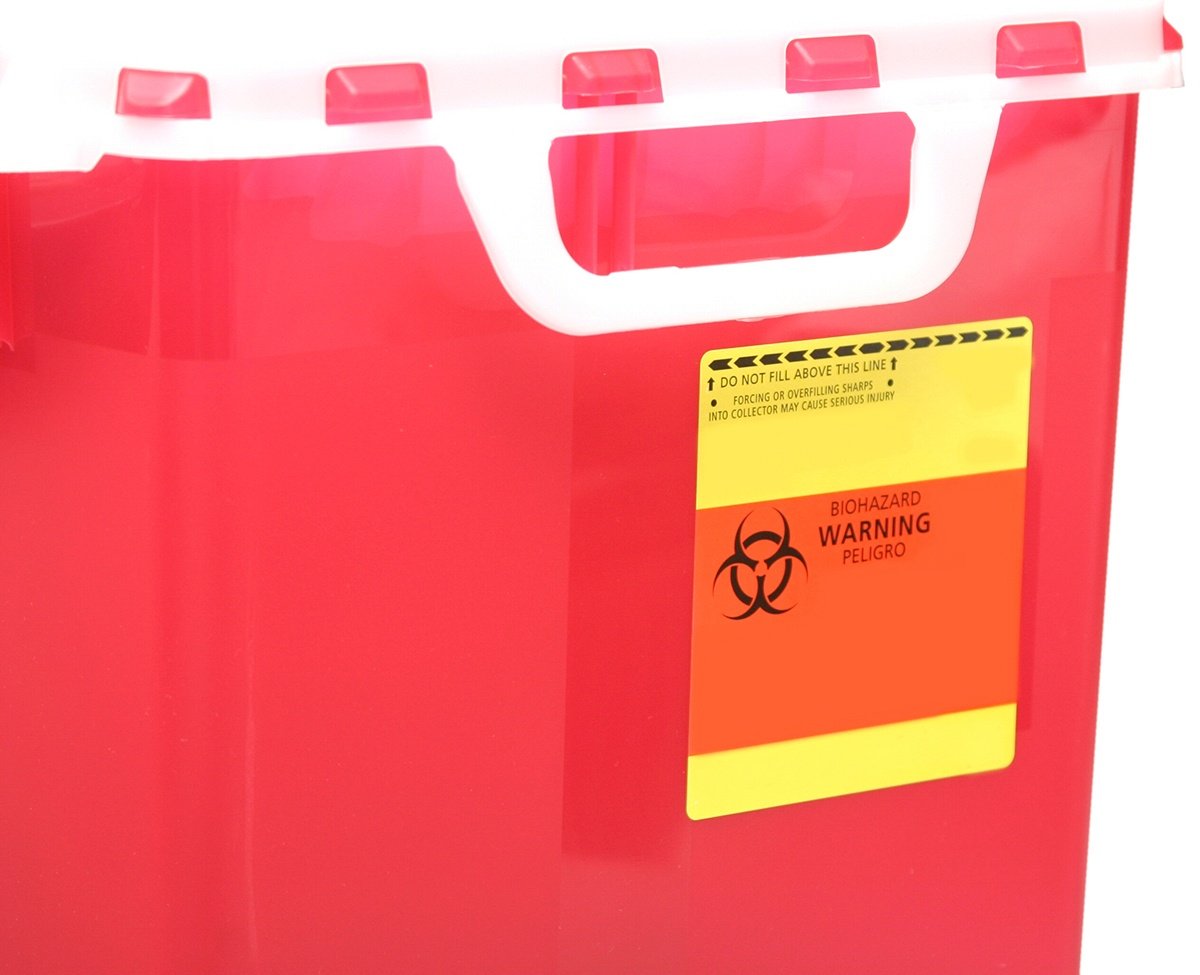
When it comes to transporting regulated medical waste (RMW), not just any box or bin will do. The Department of Transportation (DOT) has strict regulations on how medical waste must be packaged, labeled, and transported — and failure to comply can put your facility at risk for fines, violations, and even personal liability.
So, what is a DOT-approved container, and how do you know if you’re using the right one?
Let’s break it down.
What Is a DOT-Approved Container?
A DOT-approved container is a packaging solution that has been independently tested and certified to meet DOT standards for transporting hazardous materials — including regulated medical waste. These standards are outlined in Title 49 of the Code of Federal Regulations (49 CFR).
In short: if your medical waste is being transported off-site for treatment, it must be packaged in a container that’s officially certified to handle the type of waste and the level of risk it poses.
What Is Regulated Medical Waste?
According to the DOT, regulated medical waste is classified under:
UN3291
Hazard Class 6.2 (Infectious Substances)
Packaging Group II (PGII)
This includes any waste contaminated with blood, bodily fluids, or other potentially infectious materials (OPIM) — such as used sharps, soaked gauze, or lab specimens.
Under the DOT’s Hazardous Materials Table (49 CFR §172.101), medical waste must be packaged according to specific requirements to minimize public health and safety risks during transport.
DOT Packaging Group Requirements for Medical Waste
The DOT uses Packaging Groups (PG) to rate the level of danger associated with a waste material:
| Packaging Group | Risk Level | Container Marking |
|---|---|---|
| PG I | Great danger | X |
| PG II | Medium danger | Y (most common for RMW) |
| PG III | Minor danger | Z |
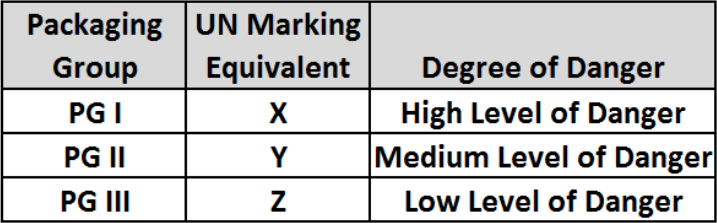
Medical waste (UN3291) falls under Packaging Group II, which means it must be packaged in a Y-rated DOT-approved container.
How Are DOT Containers Tested?
Before a container can be marked as DOT-approved, it must pass a series of third-party tests, including:
Drop tests (to simulate transportation mishandling)
Leakproofness tests
Vibration resistance
Stacking strength
Puncture resistance
Handle integrity tests
Hydrostatic pressure tests
These rigorous tests ensure the container won’t leak, burst, or break — even under rough transit conditions.
What Labels and Markings Are Required?
Every DOT-approved container must be clearly marked with:
UN Identification Number (e.g., UN3291)
Hazard Class (e.g., 6.2)
Packaging Group rating (e.g., PGII or Y)
DOT compliance markings and symbols
Closure instructions (provided by the manufacturer and required by law)
Proper labeling is non-negotiable. Even if the container itself meets DOT standards, missing or incorrect labels can result in violations and fines.
Cradle-to-Grave Liability: Why This Matters to You
Under federal law, your medical facility is responsible for its waste from generation to destruction — known as the cradle-to-grave rule.
That means if your waste is:
Improperly packaged
Mislabeled
Transported in a non-compliant container
…your practice, not just your waste vendor, could face penalties, audits, or lawsuits.
Real Example:
A clinic in Pennsylvania was fined after its waste vendor improperly labeled containers as PGIII instead of PGII. Even though the vendor made the mistake, the facility was held liable.
How to Stay Compliant with DOT Packaging Rules
Verify Your Container Rating
Make sure it’s marked for PGII or higher (Y-rated).
Look for UN3291 labeling for medical waste.
Follow Closure Instructions
Always seal containers exactly as instructed by the manufacturer.
Keep closure documentation for your records.
Train Your Staff
Ensure anyone packaging or labeling containers is DOT Hazmat trained.
Provide annual refreshers and document all training.
Ask to see their ADEM, DOT, and EPA permits.
Request proof that they’re using fully compliant packaging and shipping systems.
Hazardous Materials Table
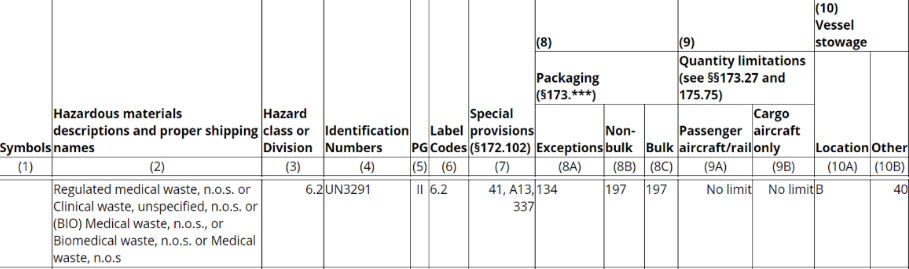
The staff member that packs and prepares your office’s healthcare waste for transportation is responsible for determining a lot of detailed information about your waste. First, he/she must identify the proper Shipping Name and UN Identification Number for the waste being collected and packaged for transportation. Based on this information, your packager must reference the Hazardous Material Table to find the details of the transportation packaging requirements. Below are the details outlined in the Hazardous Materials Table which covers regulated medical waste, UN3291. The complete Hazardous Materials Table is in Section 172.101 of 49 CFR. (Link – 49 CFR Sec 172.101).
Here is a breakout of each column in the table with information to help you determine what goes in each column.
Key Takeaways
A DOT-approved container is required to legally transport regulated medical waste like used sharps, soaked bandages, and biohazardous items.
Medical waste is classified under UN3291, Hazard Class 6.2, and Packaging Group II.
Containers must be Y-rated (PGII) and pass strict testing requirements.
Your facility is liable for any packaging violations — even after the waste leaves your premises.
Need Help Finding DOT-Approved Containers?
TriHaz Solutions offers fully compliant medical waste packaging and transportation for facilities across the Southeast. Download our free compliance checklist or schedule a consultation to verify your containers and waste handling process are DOT-ready.
Understanding healthcare waste container labels is key to keeping your medical facility compliant with DOT standards. Each medical waste container has markings that confirm the degree of danger it contains and to determine how it should be handled. TriHaz Solutions will guide you through the proper packaging steps for your facility’s medical waste to ensure safety and compliance.