

In an era where efficient and skillful healthcare delivery is more critical than ever, medical advances and improvements technology are fueling industry growth. As the healthcare industry continues to grow, medical waste production has become a significant concern. As healthcare providers strive to offer the best in patient care, the byproduct is a considerable amount of medical waste. In this blog by Trihaz Solutions, we dive into the scope of medical waste generation each year and discuss the implications for healthcare facilities, public health, and the environment.
Annual Generation of Medical Waste
The generation of medical waste is significantly influenced by regulatory compliance. An average hospital bed can produce up to 33 pounds of waste daily. This results in more than 6 million tons of medical waste annually in the U.S. alone. Such a vast amount of waste underscores the critical need for proper and safe disposal practices driven by legal, health, and environmental considerations. Effective waste management is essential to mitigate its impact on public health and the environment.
Average Medical Waste Per Patient Per Day (Pounds)
How much medical waste does a patient generate per day?
On average, a patient in a U.S. healthcare facility generates approximately 4.5 to 5.5 pounds of medical waste per day. This number can vary based on the type of facility (e.g., hospital vs. outpatient clinic), the patient’s condition, and the procedures involved.
What types of waste are included in that average?
The 4.5–5.5 lbs/day figure typically includes:
General waste (~85%): Non-hazardous trash like paper, food waste, packaging.
Infectious waste (~10%): Items contaminated with blood, body fluids.
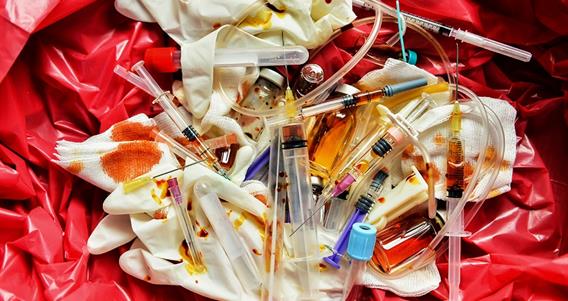
Hazardous waste (~5%): Chemicals, pharmaceuticals, sharps, radioactive materials.
Are these numbers increasing?
Yes. The rise of single-use disposables, especially post-COVID, has increased the amount of plastic-heavy waste per patient. Also, with more outpatient and home-based care, waste is increasingly being generated outside of hospitals — often improperly disposed of.
What Constitutes Medical Waste?
Factors Influencing Medical Waste Generation
Innovations in Waste Reduction
How Much Medical Waste is Produced Each Year?
Understanding the magnitude of medical waste production each year highlights the need for efficient and sustainable management strategies. As experts in medical waste management, Trihaz Solutions is committed to providing solutions that ensure safety, compliance, and environmental stewardship. The journey towards better medical waste management is ongoing and requires the concerted effort of all stakeholders in the healthcare sector.