
Effective communication within healthcare settings is crucial to ensuring patient safety and quality of care. One tool that has gained widespread recognition for its simplicity and effectiveness is the SBAR (Situation, Background, Assessment, Recommendation) technique. This blog post by TriHaz Solutions will explore the SBAR method, providing examples and insights into how it can be applied within healthcare environments to enhance communication among professionals.
What is SBAR?
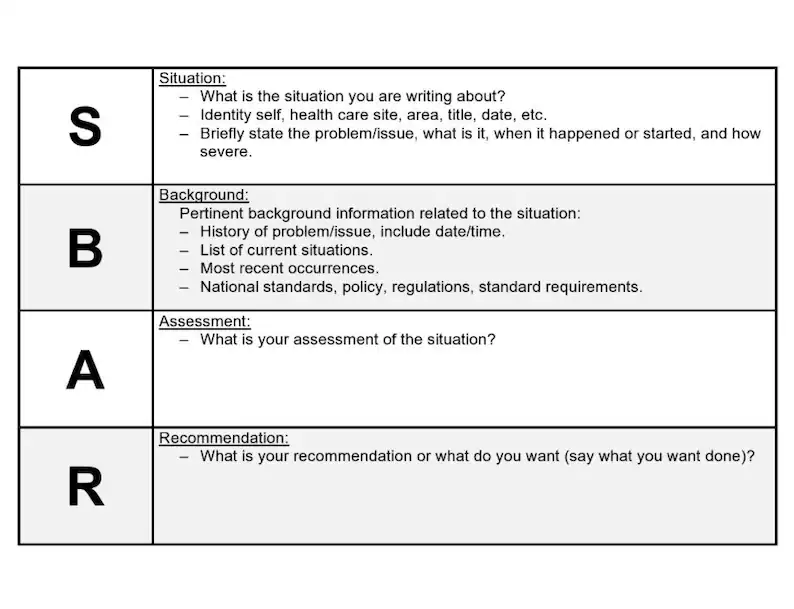
SBAR is a standardized communication framework designed to facilitate clear and concise information sharing. It originated in the military and was later adapted by healthcare institutions to improve communication and prevent errors. The SBAR method is structured into four components:
Situation
The “Situation” involves a brief statement describing the current condition or concern. It is the “what is happening now” aspect of the communication.
Background
The “Background” provides relevant and concise information related to the situation, including patient history or contextual details necessary for understanding the current state.
Assessment
The “Assessment” section is where the communicator shares their analysis or evaluation of the situation, based on the data and background information.
Recommendation
Finally, the “Recommendation” outlines the action or steps that the communicator believes should be taken to address the situation or resolve the issue.
SBAR Examples
To illustrate the application of the SBAR method in healthcare, let’s consider a few examples:
Example 1: Patient Admission
- Situation: A patient arrives at the emergency department with chest pain.
- Background: The patient has a history of heart disease and is currently experiencing symptoms consistent with a heart attack.
- Assessment: The patient’s symptoms and history suggest a high risk of myocardial infarction.
- Recommendation: Immediate admission and further evaluation by the cardiology team are recommended.
Example 2: Medication Adjustment
- Situation: A patient’s blood pressure readings have been consistently high over the past week.
- Background: The patient has been on antihypertensive medication for the past year, with stable readings until now.
- Assessment: The current medication regime appears to be ineffective in managing the patient’s blood pressure.
- Recommendation: Consider adjusting the medication dosage or exploring alternative treatments.
What Does SBAR Stand For
SBAR is an acronym for Situation, Background, Assessment, Recommendation. “Situation” briefly describes the current issue or concern; “Background” provides the context and relevant history; “Assessment” involves a review or evaluation of the situation based on the information available; and “Recommendation” suggests the next steps or actions to be taken. Initially developed by the military, this method has been adopted by the healthcare industry to improve communication among medical staff, thereby enhancing patient care and safety.
SBAR Example
The SBAR method is a powerful tool for enhancing communication in healthcare settings. By adopting this framework, healthcare professionals can improve the clarity and effectiveness of their interactions, ultimately leading to better patient outcomes. Trihaz Solutions is committed to promoting best practices in healthcare communication and supports the widespread adoption of SBAR among healthcare professionals.