
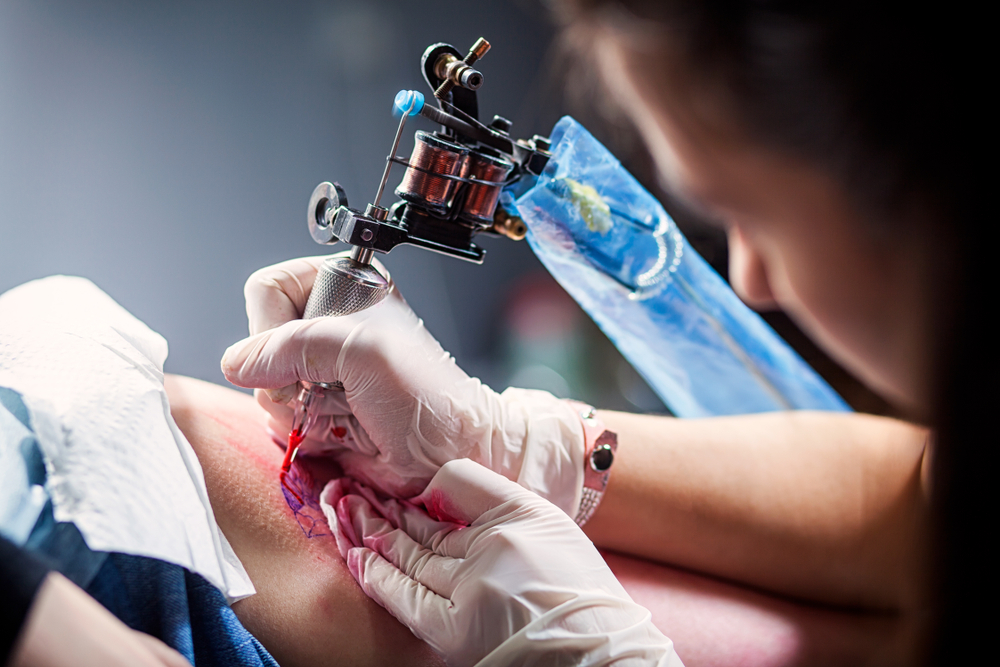
Medical waste can be a concern in places many people wouldn’t expect – Tattoo studios, for instance. Tattooing, piercing and other types of body art are not medical procedures, and the shops and studios that provide them are not healthcare facilities. However, they do share some similarities with healthcare settings in terms of the tools and materials of their trade, as well as the waste products generated as they work. So what qualifies as medical/hazardous waste in a tattoo shop, and what do these artists need to know about handling regulated waste properly?
How Body Art Generates Medical Waste
Tattoo artists create their works on a very unique canvas – human skin. Their designs are drawn on that canvas by inserting ink into the deepest layers of the skin. This is done with tattoo needles, which must puncture the skin thousands of times during each tattoo session. This means that the tattooing process involves contact with bodily fluids. Many tattoo studios also practice other forms of body art, most commonly piercings. This type of body art can also involve contact with bodily fluids.
Contact with blood and other bodily fluids creates certain health risks for both artists and clients. This includes the risk of transmitting blood-borne infections, such as hepatitis or HIV, for example. The good news is that, with proper safety, sanitation, and waste disposal practices, the risk of infection with these and other infections can be extremely low. To help ensure that risk-reducing practices are followed, these businesses are subject to many of the same safety and medical waste handling regulations that apply to medical care providers.
What Qualifies as Medical/Hazardous Waste in Tattoo Studios
The short answer to that question is that anything that comes into contact with bodily fluids – including blood, plasma, or mucus – that cannot be sterilized is considered regulated medical waste. For practitioners of body art, this means that the following commonly-used items are subject to medical/hazardous waste regulations and require special handling:
Tattoo needles
- Piercing needles
- Protective gloves
- Protective covers, such as disposable barrier gowns, face masks etc.
- Paper towels
- Gauze/bandages
- Cotton swabs
- Leftover ointment
Ink caps
In general, any single-use products or materials that are used in any body art session are considered a biohazard (infectious or contaminated material) under federal and state regulations and must be treated as medical waste.
Medical/Hazardous Waste Handling in Tattoo Shops: The Basics
Handling medical waste properly means using specialized containers to dispose of it, and tattoo/body art waste must be separated into various types of containers according to its category, as specified by federal and state-regulated waste standards. For tattoo and/or piercing artists, this typically means having two types of waste containers available during sessions:
- A sharps container – This is a heavy-duty, specially-marked container, usually red and marked with a biohazard symbol. It is designed to safeguard against the risk of injury with contaminated sharps since these items can transmit infection should anyone be stuck, scratched, or cut with them. Items that should be placed in sharps containers include tattoo needles, piercing needles, blades, lancets, razors, broken glass or any other item likely to pierce the skin.
- A biohazard waste receptacle – This may be a trash can lined with a red, disposable plastic bag that is designed for biohazard disposal – leak-resistant, moisture-resistant, and puncture resistant. It may also be a reusable container, typically red and marked with a biohazard symbol. Reusable containers must be leak-proof on the sides and bottom and have a tight-fitting lid. Used gloves, gowns, face masks, paper towels, cotton swabs, and bandages are examples of contaminated items that belong in these containers. Basically, any disposable item that has potentially come in contact with bodily fluids but does not need to be in a sharps container belongs in this container.
How to Dispose of Tattoo Ink
Proper disposal of tattoo ink is essential to prevent environmental contamination and ensure safety. Tattoo ink, especially when used or contaminated, can pose health and environmental risks if not disposed of correctly. Whether you are a tattoo artist or a studio owner, understanding the correct procedures for disposing of tattoo ink is crucial for maintaining a safe and responsible practice. This guide will outline the steps you need to take to dispose of tattoo ink properly, in compliance with local regulations and environmental guidelines.
Check Local Regulations
Before disposing of any tattoo ink, you must check your local regulations and guidelines for hazardous waste disposal. Different regions may have specific requirements for disposing of tattoo ink and other tattoo-related materials. Contact your local environmental protection agency or waste management authority to obtain the most accurate and up-to-date information on the proper disposal methods for your area. Compliance with these regulations ensures that you dispose of tattoo ink safely and responsibly, preventing potential legal issues and environmental harm.
Separate Contaminated Ink
Tattoo ink that has been used or contaminated should be separated from unused ink. Contaminated ink includes any ink that has come into contact with needles, tubes, or other equipment used during tattooing. This ink is considered hazardous and must be handled with care. By separating contaminated ink, you ensure that it is disposed of properly, reducing the risk of environmental contamination and maintaining a safe and hygienic workspace. Use clearly labeled containers to distinguish between contaminated and uncontaminated ink for easier disposal.
Use Proper Containers
Place the contaminated ink in designated, labeled containers for hazardous waste. These containers should be puncture-resistant and leak-proof to prevent any spills or leaks. Ensure the containers are securely closed and marked with labels indicating the contents and potential hazards. Using proper containers helps safeguard against accidental exposure and ensures that the hazardous ink is safely contained until it can be disposed of at a licensed facility. This step is crucial in maintaining a safe environment and complying
Dispose of Tattoo Waste with TriHaz Solutions
To safely dispose of tattoo ink, consider partnering with TriHaz Solutions. TriHaz Solutions specializes in managing hazardous and non-hazardous waste, ensuring that all materials are disposed of in compliance with local and federal regulations. By using TriHaz Solutions, you can ensure that unused ink is handled responsibly, reducing environmental impact and maintaining a safe workplace. Contact TriHaz Solutions for more information on their disposal services and how they can assist with your needs.
Avoid Pouring Ink Down the Drain
Never dispose of tattoo ink by pouring it down the drain or into regular trash. Tattoo ink contains pigments and chemicals that can harm the environment and public health if they enter the water supply or landfill. Pouring ink down the drain can lead to water pollution, potentially affecting aquatic life and contaminating drinking water sources. Always use designated hazardous waste disposal methods to manage tattoo ink safely and responsibly.
Dispose of Unused Ink
Unused ink that has not been contaminated can often be disposed of more easily than used ink, but it is still important to follow local guidelines. Some areas may allow unused ink to be disposed of in regular waste, while others may have specific requirements for hazardous materials. Always check with your local waste management authority to determine the appropriate disposal method. You can pour unused ink into a sealable container before placing it in the trash to prevent spills. Following proper disposal procedures, you help protect the environment and maintain compliance with regulations.
Tattoo Shops and Waste Disposal
Once placed in the proper containers, regulatory compliance means labeling and storing waste properly—in a secure area that is not accessible to the public—until it can be transported to a qualified waste treatment facility. Working with a solid medical waste company to manage your disposal needs can help clear up any questions about managing waste in full compliance with all state and federal health and safety regulations.

SUBSCRIBE TO OUR BLOG
Simplify your job and stay up-to-date on medical and hazardous waste compliance for healthcare and industry.
By subscribing to our blog you agree to our Privacy Policy.