
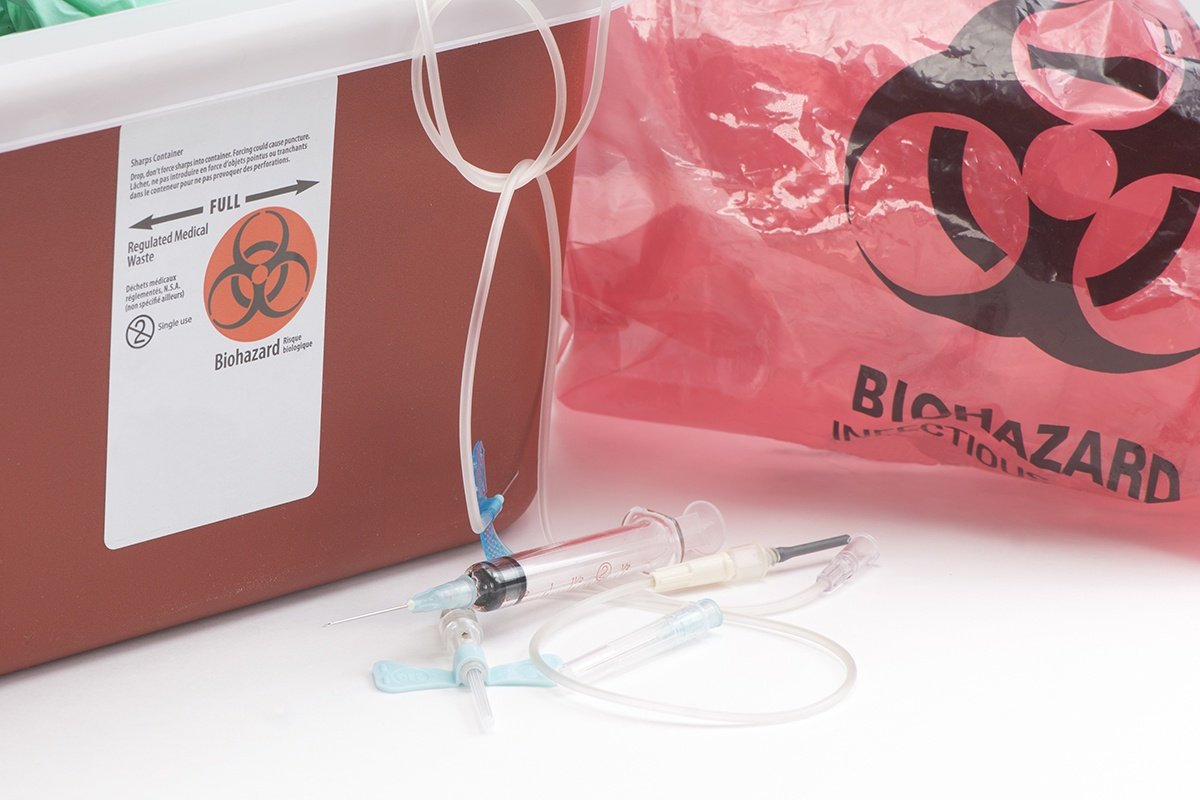
Proper waste segregation is critical for ensuring your medical practice complies with OSHA, avoids fines, and protects both patients and staff. Knowing what goes in red biohazard bags and what doesn’t is a key part of regulated medical waste (RMW) management.
Let’s break down what belongs in a red bag, how to stay compliant, and why it matters.
What Are Red Biohazard Bags Used For?
Red biohazard bags are designed for regulated medical waste (RMW) that is contaminated with blood or other potentially infectious materials (OPIM). These bags serve as a clear visual warning to anyone handling them,“this material is hazardous.”
Examples of waste that belong in red biohazard bags include:
Items visibly saturated with blood or OPIM
Used PPE contaminated with body fluids (gloves, gowns, masks)
Soaked gauze, bandages, or cotton
IV tubing and blood bags that are visibly bloody
Containers with unfixed human tissue
A closed, locked sharps container (note: not loose sharps)
Who Can Handle Red Bag Waste?
Only licensed medical waste contractors can legally collect, transport, and dispose of red bag waste. Regular city or municipal garbage services cannot accept it.
DO Put These in Red Biohazard Bags
Blood-soaked gloves, gowns, bandages, and gauze
Visibly contaminated personal protective equipment (PPE)
Items saturated with saliva, vomit, mucus, semen, or blood
All body fluids when you cannot easily identify the substance
Visibly bloody IV bags and tubing
Unfixed human tissue or body parts
A sealed and locked sharps container (placed into red bag for transport)
DON’T Put These in Red Biohazard Bags
Loose sharps (needles must go in a sharps container)
Medications or pharmaceutical waste
Chemotherapy drugs or related items
Alcohols, solvents, and fixatives
Items containing mercury or lead
Aerosol cans or inhalers
Human remains
Radioactive materials
Household trash or recyclables
Putting the wrong materials in red bags may lead to compliance violations, higher disposal costs, and safety risks for waste handlers.
How to Determine if an Item Belongs in a Red Bag
It’s not about how much blood or fluid is present, it’s about the potential to release it during handling.
Ask yourself:
Will this item drip or flake off infectious material?
Is it saturated or visibly contaminated?
Would handling this item pose a health risk to waste handlers?
If the answer is yes, it belongs in a red biohazard bag.
Example:
A cotton ball with half an ounce of blood is saturated = red bag.
A bed sheet with a small blood spot = regular trash (unless visibly soaked).
How to Properly Use Red Biohazard Bags
Use a gooseneck tie (or zip tie) to seal the red bag tightly
Place sealed red bags into approved secondary containers
Ensure red bags are not visible once inside secondary containers
Only licensed medical waste companies (like TriHaz) can collect/dispose of red bag waste
Always handle with PPE
Common Compliance Missteps
Throwing medications or aerosols into red bags
Mixing general waste with RMW
Overfilling or loosely tying red bags
Disposing of sharps outside of a container
Letting untrained staff guess what’s “hazardous”
Ensure every staff member knows the do’s and don’ts of red bag disposal.
Key Takeaways: What Goes in Red Biohazard Bags
Red biohazard bags are only for regulated medical waste (RMW) containing blood or other potentially infectious materials (OPIM).
Use them for visibly contaminated gloves, gowns, IV tubing, bandages, and unfixed tissue.
Do not use red bags for sharps (unless sealed), medications, chemo waste, or household garbage.
OSHA, EPA, and DOT require proper use of red bags for safety and compliance.
Improper waste segregation leads to higher costs, safety risks, and legal liability.
Always use PPE when handling red bags and tie them securely with a gooseneck knot.
Only certified medical waste disposal companies can transport red bags.
Train your staff regularly and provide easy-to-follow visual guides to ensure compliance.
Frequently Asked Questions
Q: Can gloves with a drop of blood go in regular trash?
A: If they’re not saturated or dripping, they can usually go in the regular trash — but always follow your facility’s policy.
Q: Are red bags required by OSHA?
A: OSHA requires safe handling of RMW. Red bags are the industry standard for meeting these requirements, especially for visibility and hazard signaling.
Q: What happens if you misuse red bags?
A: Misuse can lead to OSHA violations, state fines, and even service disruptions from your waste hauler.

SUBSCRIBE TO OUR BLOG
Simplify your job and stay up-to-date on medical and hazardous waste compliance for healthcare and industry.
By subscribing to our blog you agree to our Privacy Policy.