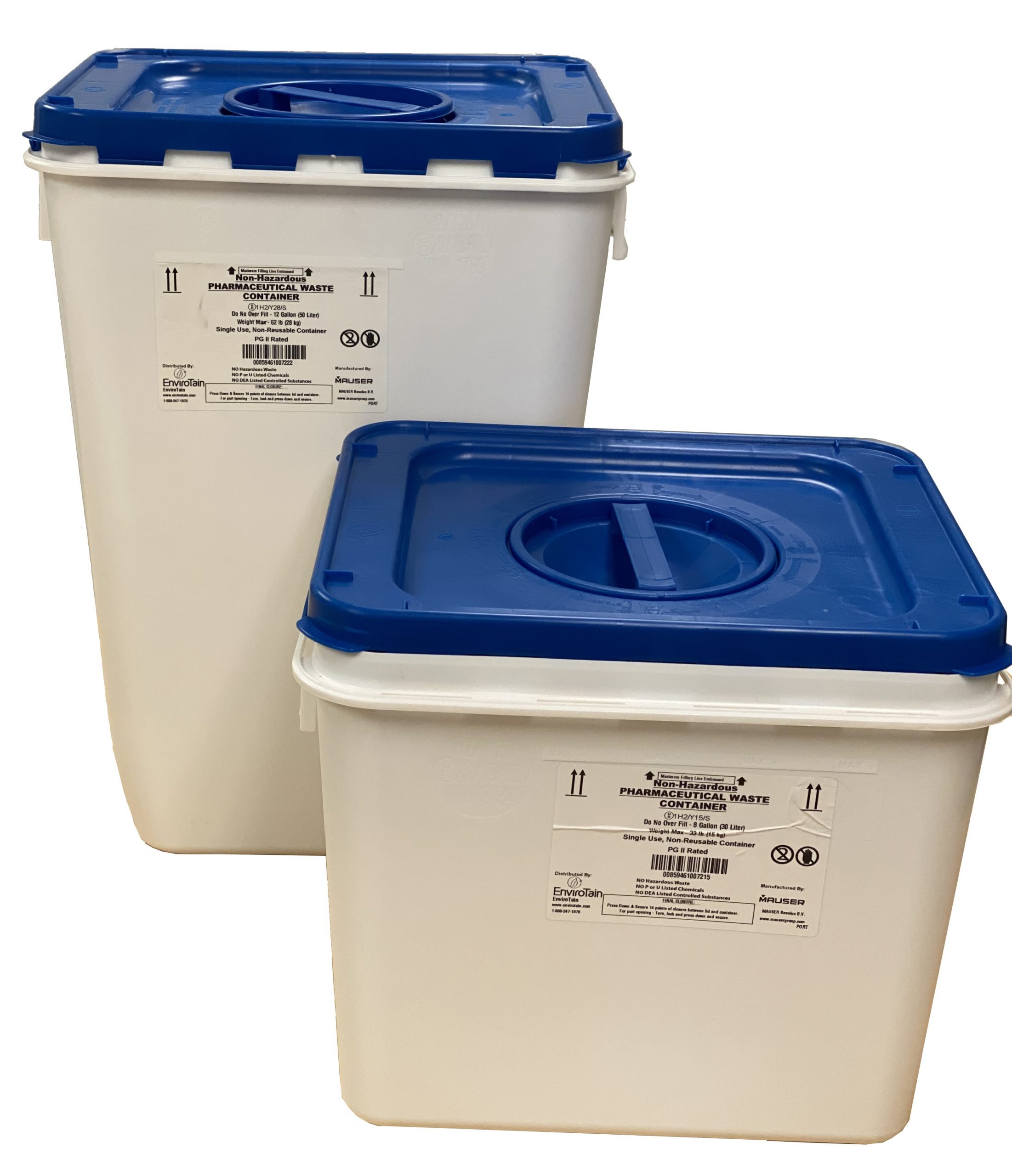
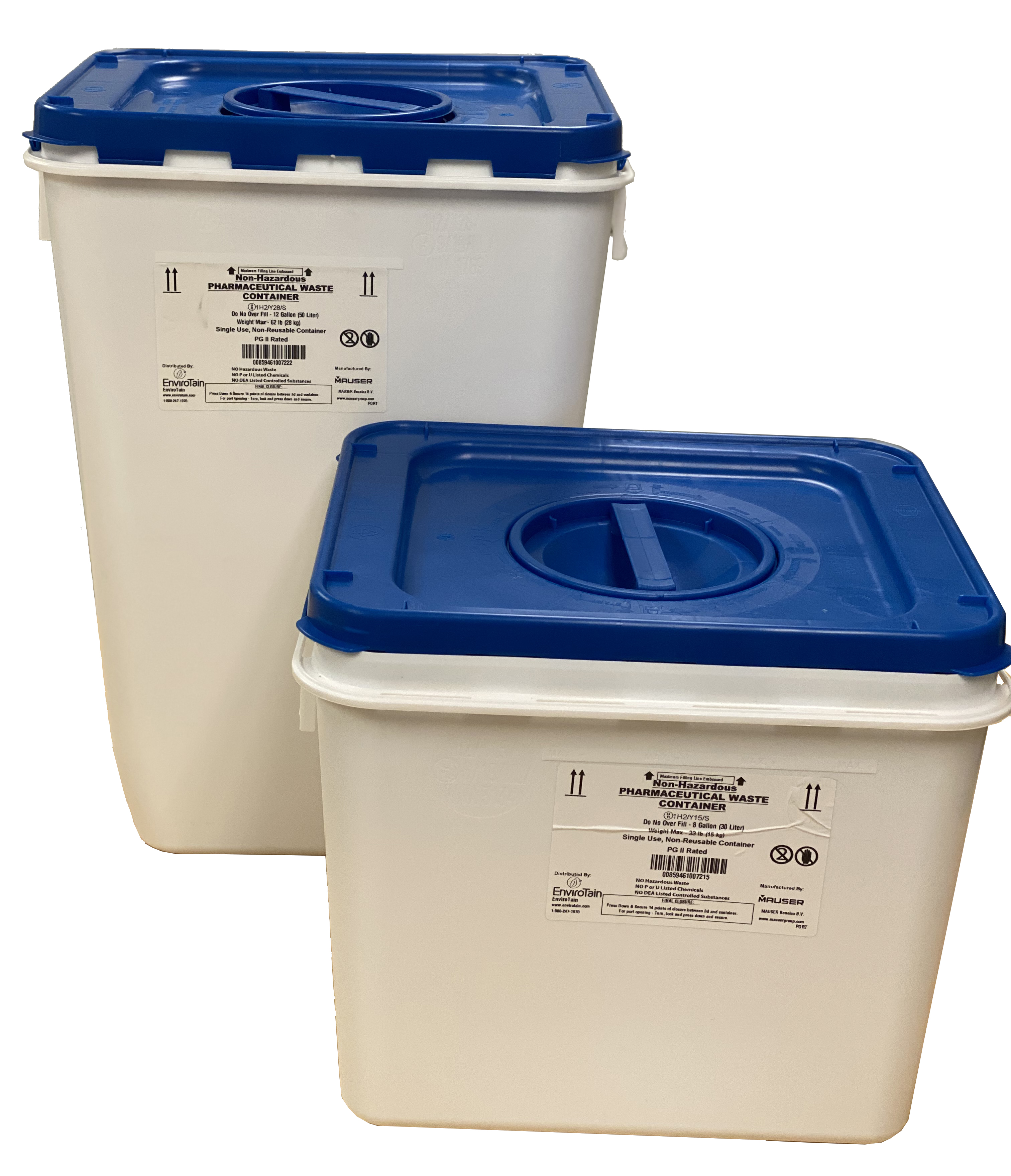
In U.S. hospitals and medical offices, the blue waste bin is used for non-hazardous pharmaceutical waste. This includes expired, unused, or partially used medications that do not meet the EPA’s definition of hazardous waste under the Resource Conservation and Recovery Act (RCRA) — meaning they are not P-listed, U-listed, or D-listed substances.
Non-hazardous pharmaceutical waste is one of the most commonly generated waste streams in healthcare settings. Every facility that stocks, dispenses, or administers medications produces it. Getting it into the right container matters — misclassifying hazardous drugs as non-hazardous is a regulatory violation, and putting non-hazardous pharmaceuticals in RCRA hazardous waste containers drives up disposal costs unnecessarily.
This guide covers exactly what goes in the blue bin, what stays out, and how to train your staff on proper pharmaceutical waste segregation.
What Is the Blue Bin Used For in Hospital?
The blue bin in a hospital is designated for non-hazardous pharmaceutical waste — any medication or pharmaceutical product being discarded that does not carry a RCRA hazardous classification.
Non-hazardous pharmaceutical waste includes drugs that are:
- Expired and no longer usable
- Discontinued from a patient’s treatment plan
- Partially used and cannot be re-administered
- Contaminated during preparation or administration
- Returned by patients and unable to be restocked
- Recalled by the manufacturer
- Sample medications that have expired or are no longer needed
The blue container keeps these pharmaceutical waste streams separate from regulated medical waste (red bags), sharps waste (sharps containers), RCRA hazardous pharmaceutical waste (black bins), and general solid waste (clear or gray bags).
What Goes in a Pharmaceutical Waste Container (Blue Bin)
The following items belong in blue non-hazardous pharmaceutical waste containers:
Oral Medications (Non-Listed):
- Most antibiotics — amoxicillin, azithromycin, ciprofloxacin, doxycycline
- Common analgesics — acetaminophen, ibuprofen, naproxen
- Blood pressure medications — lisinopril, amlodipine, metoprolol, losartan
- Diabetes medications — metformin, glipizide
- Cholesterol medications — atorvastatin, simvastatin, rosuvastatin
- Thyroid medications — levothyroxine
- Antihistamines — cetirizine, diphenhydramine, loratadine
- Antacids and GI medications — omeprazole, famotidine, ondansetron
- Most psychiatric medications — sertraline, fluoxetine, escitalopram (note: some may require controlled substance disposal procedures if DEA-scheduled)
- Vitamins and supplements
Injectable Medications (Non-Listed):
- Partially used vials of non-hazardous medications
- Pre-filled syringes with non-hazardous drugs (remove needle into sharps container first, unless the syringe contained a P-listed drug)
- Non-hazardous IV bag residuals
- Reconstituted medications that were not administered
Topical and Other Formulations:
- Non-hazardous creams, ointments, and lotions
- Non-hazardous ophthalmic drops and solutions
- Non-hazardous inhalers (note: some aerosol inhalers may be D-listed for ignitability — check the SDS)
- Transdermal patches that do not contain P-listed or U-listed drugs
The bottom line: If the medication does not appear on the EPA’s P-list, U-list, or D-list, and it is not a DEA-controlled substance requiring separate disposal, it goes in the blue bin.
What Does NOT Go in the Blue Bin
Keeping the wrong waste out of the blue container is just as important as putting the right waste in. Here is what must be kept out of the blue pharmaceutical waste bin:
RCRA Hazardous Pharmaceutical Waste (Goes in Black Containers):
- P-listed acute hazardous drugs — warfarin (at concentrations >0.3%), epinephrine, nicotine products, nitroglycerin, arsenic trioxide, phentermine, physostigmine
- U-listed hazardous drugs — cyclophosphamide, daunomycin, chlorambucil, melphalan, mitomycin C, lindane, selenium sulfide
- D-listed characteristic waste — pharmaceuticals that are ignitable, corrosive, toxic, or reactive
- Any materials contaminated with P-listed drug residue (gloves, vials, tubing, absorbent pads)
Putting RCRA hazardous waste in the blue bin instead of the black bin is a regulatory violation that can trigger EPA enforcement action. When in doubt about a specific drug, check it against the P-list and U-list before disposal.
Regulated Medical Waste (Goes in Red Biohazard Bags):
- Blood-soaked materials and items saturated with blood or body fluids
- Microbiological waste
- Pathological waste
Sharps (Go in Sharps Containers):
- Needles, syringes with attached needles, scalpel blades, broken glass
- Exception: if the syringe contained a P-listed drug, the entire syringe including the needle goes in the black RCRA container
Chemotherapy Waste (Goes in Yellow Containers):
- Trace chemotherapy waste from non-RCRA-listed antineoplastic agents — IV administration sets, empty bags, gowns, gloves
- If the chemotherapy drug also has a RCRA listing (cyclophosphamide, daunomycin, etc.), it goes in the black container instead
DEA Controlled Substances:
- Schedule II–V controlled substances require separate DEA-compliant disposal procedures, even if the drug itself is non-hazardous
- Controlled substances do not go in the blue bin — they require witnessed destruction and specific documentation
General Trash:
- Paper towels, packaging, food wrappers, and other non-contaminated waste go in regular trash receptacles, not the blue bin
- Putting general waste in pharmaceutical containers increases your disposal costs for no compliance benefit
Non-Hazardous Pharmaceutical Waste Belongs in What Color Container?
Non-hazardous pharmaceutical waste goes in blue (or green) containers in most U.S. healthcare facilities.
Here is the complete pharmaceutical waste color code breakdown:
| Container Color | Waste Type | Examples |
|---|---|---|
| Blue (or Green) | Non-hazardous pharmaceutical waste | Most antibiotics, analgesics, blood pressure meds, expired medications |
| Black | RCRA hazardous pharmaceutical waste | P-listed drugs (warfarin, epinephrine, nicotine), U-listed drugs (cyclophosphamide), D-listed characteristic waste |
| Yellow | Trace chemotherapy waste (non-RCRA) | IV sets, empty chemo bags, gowns/gloves from chemo administration |
| Red | Regulated medical waste / biohazardous | Blood-soaked materials, pathological waste, microbiological waste |
| Sharps Containers (Red, puncture-resistant) | Sharps waste | Needles, scalpel blades, broken glass |
Important note: While blue is the most widely adopted color for non-hazardous pharmaceutical waste in U.S. facilities, there is no federal regulation mandating a specific color. Some facilities use green or other designated colors. The critical requirement is that your facility maintains a consistent system, that containers are clearly labeled, and that all staff are trained on which waste goes where. Your waste disposal provider must be able to identify each waste stream during pickup.
Blue Dustbin Used For in Hospital: U.S. vs International Standards
If you are researching “blue dustbin used for in hospital,” the answer depends on which country’s color coding system you are referencing.
In U.S. healthcare facilities: Blue bins are designated for non-hazardous pharmaceutical waste — expired, unused, or discarded medications that do not carry a RCRA hazardous classification. This is a specific, regulated waste stream that requires proper disposal through a licensed pharmaceutical waste transporter.
In international healthcare settings (WHO / India BMWM Rules): Blue bins or blue dustbins are sometimes designated for glassware and metallic body implants, or for general recyclable pharmaceutical waste depending on the specific national guidelines adopted.
These are not the same classification. If your facility operates in the United States, follow the U.S. RCRA-based color coding system and your state’s specific regulations. If you are in another country, confirm which national or WHO-aligned standard your facility has adopted.
How to Identify Non-Hazardous vs Hazardous Pharmaceutical Waste
The single most common compliance mistake in pharmaceutical waste segregation is putting hazardous drugs in the blue non-hazardous bin. Here is how to correctly classify each drug before disposal:
Step 1: Check the P-list The EPA’s P-list identifies acute hazardous pharmaceutical waste. If the drug appears on the P-list and is being discarded as an unused commercial chemical product, it is acute hazardous waste. It goes in the black container — never the blue bin. All materials that contacted P-listed residue (gloves, tubing, vials) also go in the black container.
Step 2: Check the U-list The EPA’s U-list identifies toxic hazardous pharmaceutical waste. The U-list contains 21 pharmaceutical compounds. Same rule: if the drug is on the U-list and is being discarded as an unused commercial chemical product, it goes in the black container.
Step 3: Check for D-list characteristics If the drug is not on the P or U list, check whether it exhibits any of the four hazardous characteristics:
- Ignitability (D001) — Flash point below 140°F (common in alcohol-based solutions and certain aerosol inhalers)
- Corrosivity (D002) — pH below 2.0 or above 12.5
- Reactivity (D003) — Unstable or explosive
- Toxicity (D004–D043) — Exceeds TCLP thresholds
Review the Safety Data Sheet (SDS) for each product. Most manufacturers clearly indicate whether a product exhibits hazardous characteristics.
Step 4: Check DEA scheduling If the drug is a Schedule II–V controlled substance, it requires DEA-compliant disposal regardless of its RCRA status. Do not place controlled substances in the blue bin.
Step 5: If none of the above apply — it goes in the blue bin If the pharmaceutical product is not P-listed, not U-listed, does not exhibit D-list characteristics, and is not a DEA-controlled substance, it is non-hazardous pharmaceutical waste and belongs in the blue container.
Post this decision tree near every pharmaceutical waste container in your facility. Staff should not have to memorize drug lists — they need a quick reference they can check in real time.
Blue Bin Waste in Hospital: By Department
Non-hazardous pharmaceutical waste is generated across nearly every department in a hospital. Here is where blue bin waste typically originates:
Pharmacy:
- Expired medications pulled during inventory rotation
- Damaged or recalled non-hazardous drugs
- Compounding waste from non-hazardous preparations
- Unused sample medications past expiration
Nursing Units / Med-Surg:
- Partially used oral medications returned from patient rooms
- Non-hazardous IV bag residuals
- Discontinued medications from updated treatment plans
- Pre-filled syringes not administered (needles removed to sharps container)
Emergency Department:
- Partially used non-hazardous vials opened during emergencies but not fully administered
- Non-hazardous medications from expired crash cart stock
Outpatient Clinics / Physician Offices:
- Expired sample medications
- Partially used multi-dose vials
- Non-hazardous topical preparations
Dental Offices:
- Expired local anesthetics (non-hazardous formulations)
- Unused non-hazardous oral medications
- Expired fluoride treatments and non-hazardous rinses
Veterinary Clinics:
- Expired non-hazardous veterinary pharmaceuticals
- Partially used vials and injectable medications
- Non-hazardous topical treatments
Pharmaceutical Waste Container Requirements
Blue pharmaceutical waste containers must meet physical and regulatory standards to ensure safe handling during storage and transport:
Physical requirements:
- Containers must be leak-proof and puncture-resistant
- Lids must close securely — containers should remain closed when not actively receiving waste
- Containers should be rigid enough to resist crushing, tearing, or bursting during transport
- Size should be appropriate for the waste volume your facility generates — oversized containers that sit partially full for weeks create unnecessary risk
Labeling:
- Each blue container should be clearly labeled “Non-Hazardous Pharmaceutical Waste” or equivalent designation
- Labels must be visible and legible
- If your facility uses a color other than blue for non-hazardous pharmaceutical waste, the label is the primary identifier — not the color
Placement:
- Position blue bins in every area where non-hazardous pharmaceuticals are prepared, dispensed, or administered
- Place them adjacent to (but visually distinct from) black RCRA hazardous waste containers so staff can clearly see both options at the point of disposal
- Keep containers accessible but not in patient areas where visitors or non-staff could access them
Storage:
- Non-hazardous pharmaceutical waste does not carry the same stringent storage time limits as RCRA hazardous waste, but it should not accumulate indefinitely
- Establish a regular pickup schedule with your waste disposal provider based on the volume your facility generates
- Store containers in a designated waste staging area prior to pickup
The Permit Your Waste Provider Must Have
RCRA’s cradle-to-grave liability applies to pharmaceutical waste — your facility is responsible for waste from the moment it is generated through final disposal. Even if you segregate correctly and use the right containers, you can be held liable if your waste provider does not maintain proper permits.
In Alabama specifically, the Alabama State Board of Pharmacy requires a valid pharmaceutical waste transportation permit to transport pharmaceuticals of any kind. This is one of the most commonly overlooked permits among waste management providers. Without it, your facility could be in violation of requirements from the Alabama Department of Environmental Management (ADEM).
Before contracting with any waste disposal provider, verify that they maintain:
- A current pharmaceutical waste transportation permit from the state board of pharmacy
- An ADEM permit for transporting pharmaceutical waste (Alabama facilities)
- TDEC authorization for pharmaceutical waste transport (Tennessee facilities)
- DOT hazardous materials transportation compliance for any RCRA hazardous waste they handle
- Current liability insurance covering pharmaceutical waste incidents
Ask your provider for documentation. If they cannot produce current permits, that is a red flag you cannot ignore — your facility’s compliance depends on their credentials.
Setting Up Pharmaceutical Waste Segregation in Your Facility
Effective pharmaceutical waste segregation requires systems, not just training. Here is how to implement a reliable blue bin program:
1. Audit your formulary against the RCRA lists Go through every pharmaceutical product your facility stocks. Flag every P-listed, U-listed, and D-listed drug. Create a facility-specific reference sheet showing which drugs go in the black container and which go in the blue. This removes the guesswork for staff.
2. Place containers together at every disposal point Put the blue bin (non-hazardous) and black bin (hazardous) side by side at every location where pharmaceutical waste is generated. When staff can see both options in the same spot, segregation errors drop significantly.
3. Post visual reference guides Mount a laminated quick-reference card next to each container pair showing your facility’s most common P-listed, U-listed, and D-listed drugs in one column and non-hazardous drugs in the other. Include photos of the drugs if possible.
4. Train all staff who handle medications Every employee who touches pharmaceuticals — pharmacists, nurses, MAs, techs — needs to understand the blue/black distinction. Training should use real examples from your facility’s formulary, not generic lists.
5. Establish pickup frequency Work with your waste disposal provider to determine the right container count and pickup schedule. Pharmaceutical waste should not sit for extended periods. A regular schedule prevents overflow and reduces the risk of accidental misclassification as containers fill up.
6. Audit regularly Conduct periodic spot checks of blue bin contents. If you find RCRA-listed drugs in the blue container, that is a training gap that needs immediate correction. Document every audit for your compliance file.
Partner with a Compliant Waste Provider
Pharmaceutical waste segregation is manageable once your staff knows the rules and your facility has the right containers in the right places. The complexity comes from keeping up with regulatory changes, maintaining documentation, and ensuring your waste provider holds every permit required by state and federal agencies.
TriHaz Solutions provides pharmaceutical waste disposal services across Alabama and Tennessee. We work with hospitals, clinics, dental offices, veterinary practices, physician offices, and surgery centers to set up compliant waste segregation systems, provide the right containers, and maintain permitted pickup service.
We hold all required state and federal permits for pharmaceutical waste transportation, including the Alabama State Board of Pharmacy pharmaceutical waste transportation permit.
TriHaz Solutions is a permitted medical waste and pharmaceutical waste transporter serving Alabama and Tennessee. This guide is for informational purposes and does not constitute legal or regulatory advice. Consult the EPA, your state environmental agency (ADEM in Alabama, TDEC in Tennessee), or your compliance counsel for requirements specific to your facility.