
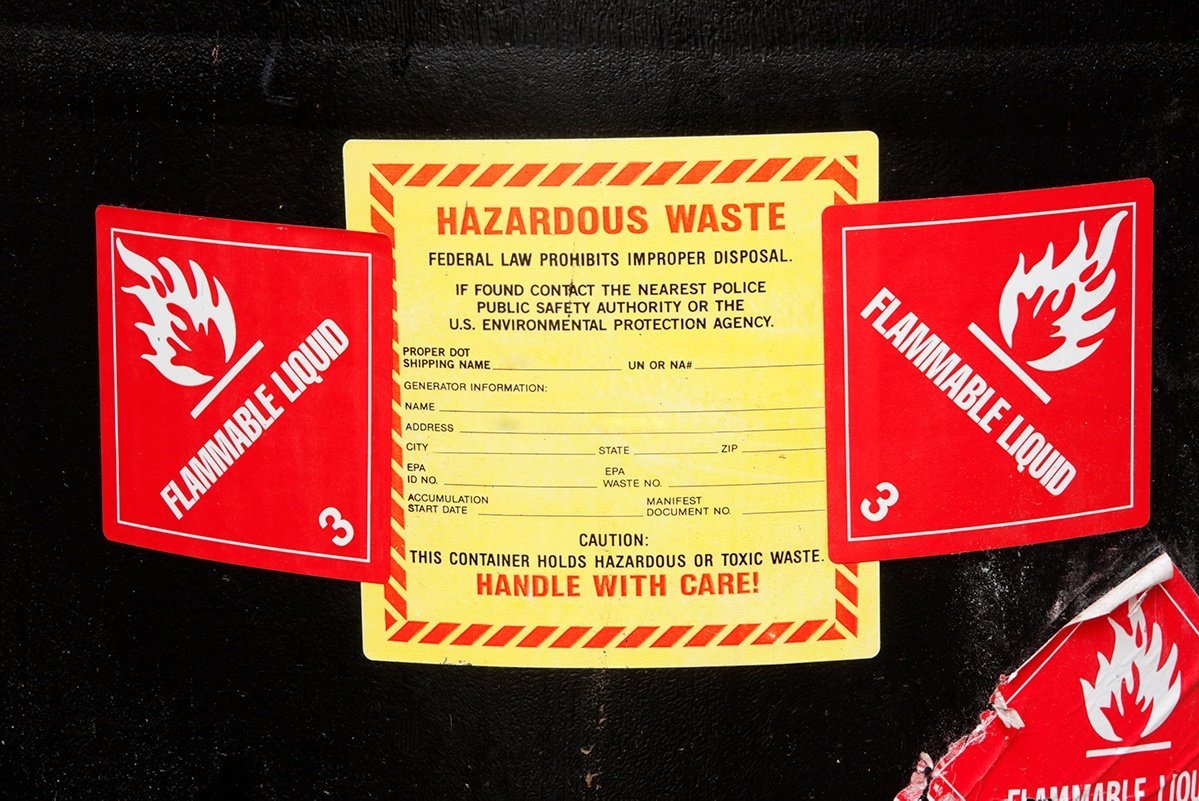
In U.S. healthcare facilities, black bins are used for RCRA hazardous pharmaceutical waste. These containers collect medications and pharmaceutical products classified as hazardous under the Resource Conservation and Recovery Act — including P-listed acute hazardous drugs, U-listed toxic drugs, and D-listed characteristic waste that is flammable, corrosive, toxic, or reactive.
If your facility generates, handles, or discards any pharmaceutical products, your staff needs to know exactly what goes in the black container, what does not, and why getting it wrong can result in EPA enforcement action and significant fines.
This guide covers the complete black bin classification system, specific examples of waste that belongs in each container, and the RCRA rules that govern pharmaceutical waste segregation in hospitals, clinics, and medical offices.
What Are Black Bins Used For in Healthcare?
Black bins in healthcare facilities are designated for RCRA hazardous pharmaceutical waste — medications and pharmaceutical products that meet the EPA’s definition of hazardous waste under the Resource Conservation and Recovery Act.
This includes three categories of listed and characteristic hazardous waste:
- P-listed waste — Acute hazardous pharmaceutical waste from discarded commercial chemical products
- U-listed waste — Hazardous pharmaceutical waste from discarded commercial chemical products, primarily listed for toxicity
- D-listed waste — Characteristic waste that exhibits one or more hazardous properties: ignitability, corrosivity, toxicity, or reactivity
The black container separates these hazardous pharmaceutical waste streams from other medical waste categories — regulated medical waste (red bags), sharps waste (sharps containers), non-hazardous pharmaceutical waste (typically blue containers), and general solid waste (clear or gray bags).
Proper segregation into the correct container is not optional. Mixing RCRA hazardous pharmaceutical waste with other waste streams is a violation that can trigger EPA enforcement, state regulatory action, and fines that escalate with each occurrence.
What Goes in Black Pharmaceutical Waste Containers
The following items must be disposed of in black RCRA hazardous pharmaceutical waste containers:
P-Listed Acute Hazardous Drugs:
- Epinephrine
- Nicotine (patches, gum, lozenges)
- Nitroglycerin
- Warfarin (Coumadin) — at concentrations greater than 0.3%
- Arsenic trioxide (Trisenox)
- Physostigmine
- Phentermine
U-Listed Hazardous Drugs:
- Cyclophosphamide
- Daunomycin (Daunorubicin)
- Diethylstilbestrol
- Lindane
- Melphalan
- Mitomycin C
- Streptozotocin
- Uracil mustard
- Chlorambucil
- Selenium sulfide
D-Listed Characteristic Hazardous Waste:
- Ignitable pharmaceuticals — alcohol-based solutions, certain aerosol medications
- Corrosive pharmaceuticals — solutions with pH below 2 or above 12.5
- Toxic pharmaceuticals — products that exceed TCLP thresholds for heavy metals or organic compounds
- Reactive pharmaceuticals — products that are unstable, explosive, or react violently with water
Other Hazardous Items for the Black Container:
- Antineoplastic (chemotherapy) waste that also carries a RCRA listing
- Mercury-containing devices — thermometers, blood pressure cuffs, sphygmomanometers, batteries
- Chemical reagents — xylene, formaldehyde, formalin, acetone, toluene, fixatives
- Disinfectants and chemical sterilizing agents classified as hazardous
- Partially used vials, syringes, or IV bags that contained P-listed or U-listed drugs
Important note on P-listed waste: P-listed drugs are classified as acute hazardous waste, which carries stricter handling and storage rules than U-listed or D-listed waste. Any container, gloves, PPE, or materials contaminated with P-listed residue must also go in the black container. This includes empty vials, used syringes, IV tubing, and any absorbent materials that contacted the drug. Arsenic trioxide specifically requires its own separate black RCRA container because it cannot be combined with other P-listed waste.
Black Bin Waste in Hospital: Complete Breakdown
In a U.S. hospital setting, the black bin collects hazardous pharmaceutical waste generated across multiple departments. Here is how black bin waste is typically generated by department:
Pharmacy:
- Expired P-listed and U-listed medications
- Damaged or recalled hazardous pharmaceuticals
- Compounding waste from hazardous drug preparation
- Unused bulk hazardous chemicals
Oncology / Infusion Centers:
- Antineoplastic agents with RCRA listings (cyclophosphamide, daunomycin, mitomycin C)
- IV bags, tubing, and administration sets that contained listed hazardous drugs
- PPE and absorbent pads contaminated with listed hazardous drug residue
- Partially used vials of listed chemotherapy agents
Nursing Units:
- Warfarin (Coumadin) waste — partially used tablets, contaminated materials
- Nitroglycerin patches, tablets, and spray
- Nicotine replacement products — patches, gum, lozenges
- Epinephrine auto-injectors and vials
Laboratory:
- Chemical reagents classified as hazardous — xylene, formalin, acetone
- Fixatives and staining chemicals
- Mercury from broken thermometers or equipment
Radiology / Nuclear Medicine:
- Certain contrast agents and radiopharmaceuticals that also carry RCRA classification
What Does NOT Go in the Black Bin
Knowing what stays out of the black container is just as important as knowing what goes in. Placing non-hazardous waste in black RCRA containers increases your disposal costs and can complicate your compliance documentation. Placing hazardous waste in the wrong non-black container is a regulatory violation.
Do NOT put these items in the black bin:
- Non-hazardous pharmaceutical waste — Medications that do not appear on the P, U, or D lists belong in non-hazardous pharmaceutical waste containers (typically blue). Examples include most antibiotics, common over-the-counter medications, and non-listed prescription drugs.
- Regulated medical waste (biohazardous waste) — Blood-soaked materials, saturated bandages, and items contaminated with blood or body fluids go in red biohazard bags, not black bins.
- Sharps — Needles, syringes with attached needles, scalpel blades, and broken glass go in FDA-cleared sharps containers, not black bins. Exception: if a syringe contained a P-listed drug, the entire syringe (including the needle) goes in the black container.
- General solid waste — Paper towels, food wrappers, packaging materials, and other non-contaminated trash go in regular waste receptacles.
- Chemotherapy waste without a RCRA listing — Not all chemotherapy drugs are RCRA-listed. Chemo waste that does not carry a P, U, or D listing should go in yellow chemotherapy waste containers, not the black bin. Check each agent against the RCRA lists before disposal.
- Controlled substances — DEA-regulated controlled substances require separate disposal procedures and documentation. They do not go in the black pharmaceutical waste bin unless they also carry a RCRA listing.
- Radioactive waste — Unless the item also carries a RCRA hazardous classification, radioactive waste follows separate NRC disposal protocols.
Medical Waste Disposal Bin Colors: The Full Color Code System
Healthcare facilities use a color-coded container system to segregate different waste streams. While no single federal regulation mandates a universal color scheme, the following system is the most widely adopted standard across U.S. hospitals and medical offices:
Red Containers — Regulated Medical Waste (Biohazardous Waste) Red bags and red containers are used for waste contaminated with blood or other potentially infectious materials. This includes blood-soaked bandages, surgical waste, microbiological waste, and pathological waste. Red containers must display the universal biohazard symbol.
Yellow Containers — Chemotherapy / Trace Chemotherapy Waste Yellow bins collect non-RCRA chemotherapy waste — trace amounts of antineoplastic agents on administration sets, empty IV bags, gowns, and gloves used during chemo administration. If the chemotherapy drug also has a RCRA listing, it goes in the black container instead.
Black Containers — RCRA Hazardous Pharmaceutical Waste Black bins collect P-listed, U-listed, and D-listed hazardous pharmaceutical waste as described throughout this guide.
Blue Containers — Non-Hazardous Pharmaceutical Waste Blue bins collect pharmaceutical waste that does not meet the RCRA definition of hazardous. This includes most non-listed prescription medications, OTC drugs, and non-hazardous bulk pharmaceutical waste. Blue containers are sometimes also used for non-RCRA pharmaceutical waste that still requires proper disposal rather than being placed in regular trash.
Sharps Containers (Red with Biohazard Symbol) Puncture-resistant, leak-proof containers specifically for needles, syringes, scalpel blades, and other sharp objects. FDA-cleared sharps containers are required.
Clear or Gray Bags — General Solid Waste Non-contaminated, non-hazardous general trash.
A note on color coding variation: While black is the most commonly used color for RCRA hazardous pharmaceutical waste containers in the United States, there is no federal regulation that mandates black specifically. The important thing is that your facility maintains a consistent color scheme, that all staff are trained on it, and that your waste disposal provider can clearly identify each waste stream during pickup. Whatever color you designate for hazardous pharmaceutical waste should be used exclusively for that purpose and clearly labeled.
Black Dustbin Used For in Hospital: U.S. vs International Standards
There is an important distinction between the U.S. color coding system and the international / WHO color coding system that causes significant confusion in online searches.
In U.S. healthcare facilities: Black containers are designated for RCRA hazardous pharmaceutical waste — the most dangerous category of pharmaceutical waste, requiring the most stringent handling and disposal procedures.
In international healthcare settings (WHO guidelines): Black bins are often designated for general non-hazardous waste — ordinary trash like paper towels, food wrappers, and packaging that poses no infection risk or chemical hazard.
These are opposite classifications. If your facility operates in the United States, follow the U.S. RCRA-based color coding system. If you are referencing WHO or international guidelines, confirm which system your country and facility have adopted before training staff.
For U.S. facilities: the black bin is for hazardous pharmaceutical waste, not general trash.
RCRA Hazardous Waste: The Rules Behind the Black Container
The Resource Conservation and Recovery Act (RCRA), enacted in 1976, established the federal framework for managing hazardous waste in the United States. The EPA administers the RCRA program and sets the standards that determine which pharmaceutical products qualify as hazardous waste.
How RCRA Classifies Hazardous Pharmaceutical Waste
RCRA uses two classification methods:
Listed Wastes (P-List and U-List)
For a discarded pharmaceutical to qualify as P-listed or U-listed hazardous waste, it must meet three criteria:
- The waste must contain a chemical that appears on the P or U list
- The chemical must be unused — meaning the product is being discarded rather than administered to a patient
- The chemical must be in the form of a commercial chemical product (the sole active ingredient, or a formulation where it is the sole active ingredient)
The P-list identifies acute hazardous waste — the most dangerous category. P-listed waste triggers stricter quantity thresholds, container management standards, and disposal requirements. Any material contaminated with P-listed residue (gloves, vials, tubing) must also be managed as acute hazardous waste.
The U-list identifies toxic hazardous waste — dangerous but subject to standard (non-acute) hazardous waste management rules. The U-list contains 21 pharmaceuticals primarily listed because of their toxicity.
Characteristic Wastes (D-List)
D-listed waste is not identified by a specific chemical name but by its physical or chemical properties. A pharmaceutical product is D-listed characteristic waste if it exhibits any of these four characteristics:
- Ignitability (D001) — Flash point below 140°F. Includes alcohol-based solutions, certain aerosols, and flammable pharmaceutical preparations.
- Corrosivity (D002) — pH below 2.0 or above 12.5. Certain pharmaceutical solutions and compounding agents.
- Reactivity (D003) — Unstable, explosive, or reacts violently with water. Rare in pharmaceutical settings but applicable to certain reagents.
- Toxicity (D004–D043) — Exceeds Toxicity Characteristic Leaching Procedure (TCLP) thresholds for specific heavy metals or organic compounds.
Unlike P and U-listed waste, D-listed classification is based on the waste’s characteristics rather than its identity. It is the generator’s responsibility — your facility’s responsibility — to determine whether a substance meets D-list criteria. Most manufacturers provide Safety Data Sheets (SDS) that indicate whether a product exhibits hazardous characteristics.
Pharmaceutical Waste Container Requirements
Black RCRA hazardous pharmaceutical waste containers must meet specific physical and regulatory standards:
Physical requirements:
- Containers must be structurally sound and resistant to punctures, leaks, tears, and bursts during handling and transport
- Lids must close securely — the container lid should remain closed when not actively in use
- Containers must be appropriately sized for the volume of hazardous pharmaceutical waste your facility generates
Labeling requirements:
- Each black container must be clearly labeled to identify its contents as RCRA hazardous waste
- Labels must include the words “Hazardous Waste”
- Labels should indicate the specific waste codes (P, U, or D codes) for the waste inside
- Accumulation start dates must be recorded when the container begins receiving waste
Storage and handling:
- Containers must be stored in a designated area with restricted access
- Incompatible wastes cannot be placed in the same container — for example, arsenic trioxide (a P-listed acute hazardous waste) requires its own separate black container and cannot be combined with other pharmaceutical waste
- Containers must be inspected regularly for leaks, deterioration, or damage
- Storage time limits apply based on your facility’s generator category (VSQG, SQG, or LQG)
Container closure:
- The lid of the black container must remain closed except when actively adding waste
- An open black container is a citable violation during an inspection
How to Set Up Black Bin Waste Segregation in Your Facility
Proper segregation starts with placement, training, and clear visual cues. Here is how to implement an effective black bin waste program:
1. Identify your hazardous pharmaceutical waste streams Conduct a facility-wide audit of every pharmaceutical product you stock, dispense, compound, or administer. Cross-reference each product against the EPA’s P-list, U-list, and D-list criteria. Document which products require black container disposal.
2. Place black containers in the right locations Position black bins in every area where hazardous pharmaceuticals are prepared, administered, or discarded — pharmacy, nursing stations, oncology/infusion areas, operating rooms, and anywhere P-listed or U-listed drugs are handled. Containers should be within arm’s reach of the point of waste generation.
3. Label containers clearly Every black container should display a label identifying it as a RCRA hazardous pharmaceutical waste container. Include visual aids — a posted list of common P-listed and U-listed drugs used in your facility — near each container.
4. Train all staff Every employee who generates or handles pharmaceutical waste must understand the color coding system and know which drugs go in the black container. Training should include real examples specific to your facility’s formulary, not just generic lists.
5. Establish a pickup schedule Work with your medical waste disposal provider to determine the appropriate number of black containers and pickup frequency based on your facility’s waste generation volume. Your provider should also verify that containers are properly labeled and closed during each service visit.
Consult Your Medical Waste Provider
Your medical waste services provider should be your first resource for pharmaceutical waste segregation questions. A qualified provider can audit your facility’s waste streams, recommend the correct number and placement of black containers, train your staff on proper segregation, and ensure that your containers, labeling, and documentation meet EPA, state, and DOT requirements.
Remember: RCRA’s cradle-to-grave liability means your facility is responsible for hazardous pharmaceutical waste from the moment it is generated through final treatment and disposal. Even if you segregate correctly and use the right containers, you can still be held liable if your waste provider does not maintain the required permits and comply with transportation and treatment regulations.
Always verify that your waste disposal partner maintains current permits for RCRA hazardous waste transportation and treatment in your state.
TriHaz Solutions provides regulated medical waste and pharmaceutical waste disposal services across Alabama and Tennessee. We work with hospitals, clinics, dental offices, veterinary practices, labs, and surgery centers to ensure compliant waste segregation, proper container placement, and documented pickup service.
TriHaz Solutions is a permitted medical waste transporter serving Alabama and Tennessee. This guide is for informational purposes and does not constitute legal or regulatory advice. Consult the EPA, your state environmental agency (ADEM in Alabama, TDEC in Tennessee), or your compliance counsel for requirements specific to your facility.
SUBSCRIBE TO OUR BLOG
Simplify your job and stay up-to-date on medical and hazardous waste compliance for healthcare and industry.
By subscribing to our blog you agree to our Privacy Policy.