
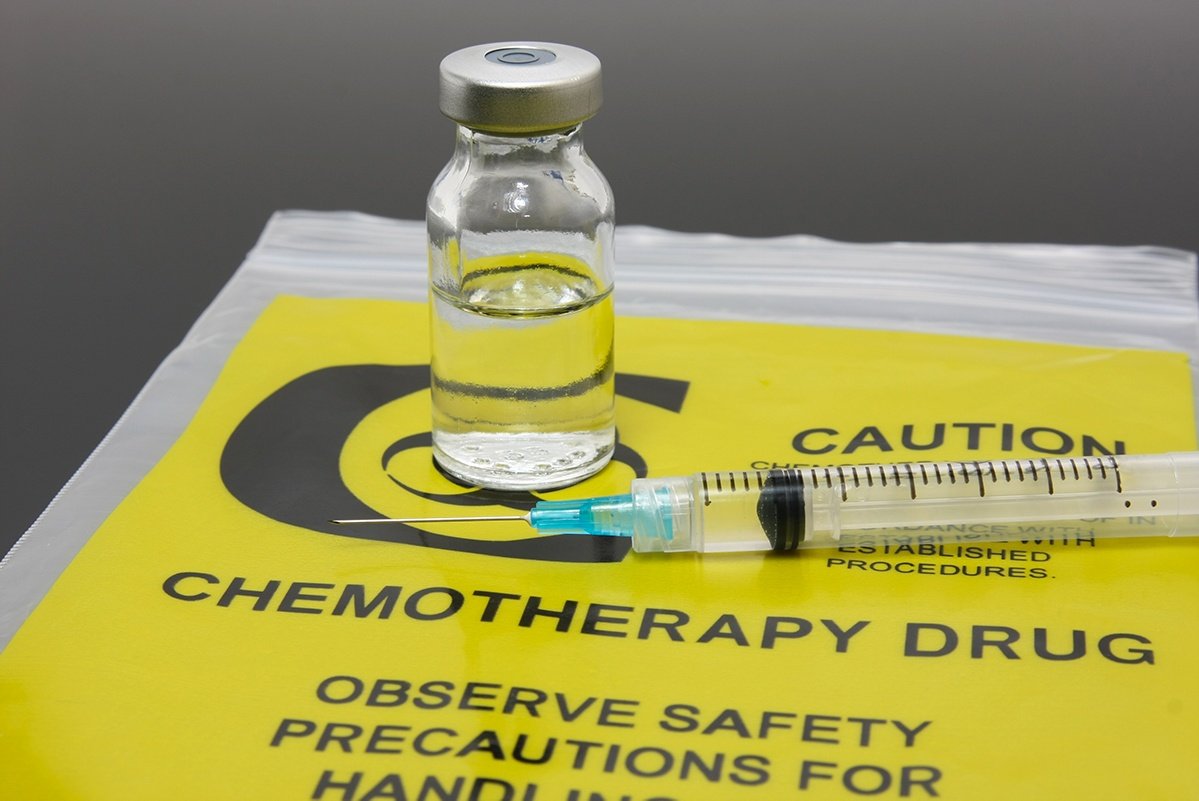
In U.S. hospitals and healthcare facilities, yellow bins are used for trace chemotherapy waste — items that have come into contact with antineoplastic (chemotherapy) drugs but contain only residual amounts of the medication, defined as less than 3% by weight of the active ingredient remaining.
Chemotherapy waste is among the most hazardous waste streams generated in healthcare settings. These drugs are designed to destroy rapidly dividing cells, which means improper handling or disposal can pose serious health risks to employees, patients, and the environment. Getting chemotherapy waste into the correct container is not just a compliance requirement — it is a safety imperative.
This guide covers exactly what goes in the yellow bin, the critical distinction between trace and bulk chemotherapy waste, the RCRA rules that govern each category, and how to set up a compliant chemotherapy waste segregation program in your facility.
What Is the Yellow Bin Used For in Hospital?
The yellow bin in a U.S. hospital is designated for trace chemotherapy waste — materials that were used during the preparation or administration of antineoplastic and cytotoxic drugs and contain only residual (trace) amounts of the medication.
Trace chemotherapy waste is defined as items that are “RCRA empty” — meaning no more than 3% of the original drug volume remains in or on the item. These materials cannot be scraped, poured, or drained to yield additional product. Only residual contamination remains.
The yellow container separates trace chemotherapy waste from other medical waste streams:
- Red containers — Regulated medical waste (biohazardous waste contaminated with blood or body fluids)
- Black containers — RCRA hazardous pharmaceutical waste (P-listed, U-listed, and D-listed drugs, including bulk chemotherapy waste from RCRA-listed agents)
- Blue containers — Non-hazardous pharmaceutical waste (medications not classified as hazardous under RCRA)
- Sharps containers — Needles, scalpel blades, and other sharps (unless contaminated with trace chemotherapy — see below)
What Goes in the Yellow Bin: Trace Chemotherapy Waste
The following items belong in yellow trace chemotherapy waste containers:
Administration Materials:
- Empty IV bags that contained chemotherapy drugs (less than 3% remaining)
- IV tubing used during chemotherapy administration
- Empty chemotherapy drug vials (less than 3% remaining)
- Empty syringes used for chemotherapy drug preparation or administration (needles removed to sharps — unless trace chemo sharps go in yellow at your facility)
- Pump cassettes from ambulatory infusion pumps
Personal Protective Equipment (PPE):
- Gowns worn during chemotherapy preparation or administration
- Gloves used during chemotherapy handling
- Face masks and respirators used during chemotherapy preparation
- Shoe covers worn in chemotherapy preparation areas
- Face shields and eye protection used during chemo handling
Surface Protection and Cleanup Materials:
- Chemo-rated absorbent pads (chux pads) used during drug preparation
- Plastic-backed barriers and drapes from chemotherapy administration areas
- Wipes and cleaning materials used for routine decontamination of chemo preparation surfaces (not spill cleanup — see bulk waste section)
Packaging and Preparation Waste:
- Outer packaging and wrapping from chemotherapy drug vials
- Alcohol swabs used during port access for chemotherapy
- Gauze or cotton used during chemotherapy line disconnection
Sharps Contaminated with Trace Chemotherapy:
- Needles, syringes, and other sharps that contacted chemotherapy drugs should be disposed of in yellow sharps containers specifically designated for trace chemotherapy waste — not in standard red sharps containers
- Some facilities use dedicated yellow-lidded sharps containers for this purpose
The key test: If the item contacted a chemotherapy drug but has less than 3% of the drug remaining (or cannot yield additional product through scraping, pouring, or draining), it is trace chemotherapy waste and goes in the yellow bin.
What Does NOT Go in the Yellow Bin
Bulk Chemotherapy Waste (Goes in Black RCRA Containers): Bulk chemotherapy waste is any item containing more than 3% by weight of a RCRA-listed chemotherapy drug. This includes:
- Partially full IV bags with chemotherapy drugs remaining
- Vials with significant residual chemotherapy drugs
- Syringes with measurable chemotherapy drug volume
- Spill cleanup materials from a chemotherapy spill (absorbers saturated with bulk drug)
- Failed preparations or compounding waste with unused chemotherapy drugs
If a RCRA-listed chemotherapy drug can be scraped, poured, or drained from the item, it is bulk waste — not trace. It goes in the black RCRA hazardous waste container, not the yellow bin.
Regulated Medical Waste (Goes in Red Biohazard Bags):
- Blood-soaked materials, surgical waste, and items contaminated with blood or body fluids that did not contact chemotherapy drugs
- Pathological waste
- Microbiological waste
Non-Hazardous Pharmaceutical Waste (Goes in Blue Containers):
- Expired or unused medications that are not chemotherapy agents and not RCRA-listed
General Solid Waste:
- Paper towels, food wrappers, packaging, and non-contaminated waste go in regular trash — never in yellow containers
- Placing general waste in yellow chemotherapy containers increases disposal costs significantly because chemotherapy waste requires incineration
Controlled Substances:
- DEA-scheduled drugs require separate disposal procedures and documentation regardless of chemotherapy status
Bulk vs Trace Chemotherapy Waste: The Critical Distinction
The single most important classification decision in chemotherapy waste management is determining whether waste is bulk or trace. This determines which container receives the waste, how it is handled, and the disposal method required.
Trace Chemotherapy Waste:
- Contains less than 3% of the original drug volume
- Cannot yield additional product through scraping, pouring, or draining
- Goes in the yellow container
- Managed as regulated medical waste
- Must be disposed of through medical waste incineration
- Includes PPE, empty administration sets, and RCRA-empty containers
Bulk Chemotherapy Waste:
- Contains more than 3% of the original drug volume
- Drug can be scraped, poured, or drained from the container or item
- Goes in the black RCRA hazardous pharmaceutical waste container
- Managed as RCRA hazardous waste
- Subject to full RCRA hazardous waste disposal requirements
- Includes partially full IV bags, vials with significant residual, and spill cleanup materials
The 3% threshold is not a rough estimate — it is the regulatory dividing line. When in doubt, treat the waste as bulk (black container). Placing bulk chemotherapy waste in the yellow trace container is a regulatory violation. Placing trace waste in the black bulk container is not a violation but increases your disposal costs.
A practical rule for staff: If you can see liquid in the IV bag, vial, or syringe — it is bulk waste (black container). If the container appears empty and you cannot pour, scrape, or drain any additional drug — it is trace waste (yellow container).
RCRA-Listed Chemotherapy Drugs: The 9 Agents That Matter Most
The EPA identifies nine chemotherapy drugs as RCRA-listed hazardous waste pharmaceuticals. When these drugs are discarded, the RCRA classification determines whether they go in the black container (bulk) or yellow container (trace):
U-Listed Chemotherapy Drugs:
- Cyclophosphamide (U058) — Cytoxan, Neosar
- Daunomycin / Daunorubicin (U059) — Cerubidine, DaunoXome
- Diethylstilbestrol (U089) — DES
- Melphalan (U150) — Alkeran
- Mitomycin C (U010) — Mutamycin
- Streptozotocin (U206) — Zanosar
- Uracil Mustard (U237)
- Chlorambucil (U035) — Leukeran
P-Listed Chemotherapy Drug: 9. Arsenic Trioxide (P012) — Trisenox
Critical note on P-listed arsenic trioxide: Because arsenic trioxide is P-listed (acute hazardous waste), it carries stricter requirements than U-listed agents. Any container, PPE, tubing, or material that contacted arsenic trioxide — even trace amounts — must be managed as acute hazardous waste in a dedicated black container. Arsenic trioxide trace waste does NOT go in the yellow bin. This is the one exception where trace chemotherapy waste goes in the black container.
What about non-listed chemotherapy drugs?
Many commonly used chemotherapy agents — including paclitaxel (Taxol), docetaxel (Taxotere), carboplatin (Paraplatin), cisplatin (Platinol), doxorubicin (Adriamycin), fluorouracil (5-FU), irinotecan (Camptosar), and vincristine (Oncovin) — are not on the EPA’s P or U lists.
However, many states and many healthcare facilities require that all chemotherapy drugs be handled as hazardous waste regardless of RCRA listing. This is a widely accepted best practice. Check your state’s requirements — in Alabama (ADEM) and Tennessee (TDEC), specific state rules may apply beyond the federal RCRA framework.
Best practice recommendation: Treat all chemotherapy waste as hazardous and manage it through the bulk/trace segregation system described in this guide, regardless of whether the specific drug has a RCRA listing. This eliminates classification errors and provides the highest level of protection for staff and patients.
What Does “RCRA Empty” Mean?
The term “trace chemotherapy waste” is the common industry term, but the official EPA designation is “RCRA empty.” Understanding this distinction matters because it defines the exact regulatory threshold.
For U-listed chemotherapy containers: A container that held a U-listed substance is considered RCRA empty when less than 3% of the original volume remains and no additional material can be removed through normal means (pouring, scraping, draining). Once RCRA empty, the container and associated waste can be managed as trace chemotherapy waste in the yellow container.
For P-listed chemotherapy containers (arsenic trioxide): The standard is different and stricter. A container that held a P-listed substance must be triple-rinsed to be considered RCRA empty. The EPA also allows two alternative methods:
- Triple-rinsing with an appropriate solvent
- Cleaning by an equivalent method demonstrated to achieve the same level of decontamination
Because of this stricter standard, most facilities manage all arsenic trioxide waste — including items that would otherwise be considered trace — in the black RCRA hazardous waste container rather than attempting to meet the RCRA-empty standard for P-listed containers.
Yellow Dustbin Used For in Hospital: U.S. vs International Standards
The meaning of a yellow bin varies significantly depending on which country’s waste management guidelines you are following.
In U.S. healthcare facilities: Yellow containers are designated for trace chemotherapy waste — items that contacted antineoplastic drugs during preparation or administration and contain less than 3% residual drug. This is a specific, tightly defined waste category that requires medical incineration for final disposal.
In international healthcare settings (WHO guidelines, UK, India, and others): Yellow bins or yellow dustbins are designated for clinical and infectious waste — materials contaminated with blood, body fluids, and infectious agents. This includes dressings, swabs, gloves, and any items that contacted infectious materials. Under the WHO system, yellow represents the infectious/clinical waste category, which is a much broader classification than the U.S. trace chemotherapy definition.
These are completely different waste categories. If your facility operates in the United States, yellow means trace chemotherapy waste — not general clinical or infectious waste (which goes in red biohazard bags under the U.S. system). If you are outside the United States, confirm which national standard your facility follows before training staff on color-coded waste segregation.
What Kind of Waste Materials Are Placed in Yellow Containers?
To summarize in a scannable format — these are the waste materials that go in yellow containers in U.S. healthcare facilities:
YES — Goes in the Yellow Container:
- Empty IV bags from chemotherapy administration (less than 3% remaining)
- IV tubing used during chemo infusion
- Empty chemotherapy vials (less than 3% remaining)
- Gowns worn during chemo prep or administration
- Gloves from chemotherapy handling
- Masks and face shields from chemo preparation
- Absorbent pads from chemo preparation surfaces
- Barriers and drapes from chemo administration
- Sharps contaminated with trace chemotherapy (in designated yellow sharps containers)
NO — Does NOT Go in the Yellow Container:
- Partially full IV bags with chemotherapy drugs (bulk → black container)
- Vials with significant residual chemotherapy drugs (bulk → black container)
- Spill cleanup materials saturated with chemotherapy drugs (bulk → black container)
- Any arsenic trioxide waste, including trace (acute hazardous → separate black container)
- Blood-soaked materials without chemotherapy contact (biohazardous → red bag)
- Non-hazardous medications (→ blue container)
- General trash (→ regular waste)
- Controlled substances (→ DEA-compliant disposal)
How Yellow Bin Waste Is Disposed Of
Trace chemotherapy waste cannot be autoclaved. Due to the toxic nature of antineoplastic drugs, yellow bin waste must be destroyed through medical waste incineration — a process that exposes waste to extremely high temperatures, reducing it to ash.
Autoclaving (steam sterilization) is acceptable for standard regulated medical waste in red bags, but it does not adequately destroy chemotherapy drug residues. Incineration is the only approved treatment method for trace chemotherapy waste.
After incineration, the resulting ash no longer poses a health risk and can be disposed of in a permitted landfill.
This is why proper segregation matters financially as well as from a compliance standpoint. Incineration costs more than autoclaving. If general waste or non-chemotherapy medical waste ends up in the yellow bin, you are paying incineration prices for waste that could have been autoclaved or landfilled at lower cost. Conversely, if trace chemotherapy waste ends up in a red bag destined for autoclaving, it will not be properly treated — creating a compliance violation and a potential safety hazard.
Chemotherapy Waste Container Requirements
Yellow chemotherapy waste containers must meet specific standards:
Physical requirements:
- Containers must be leak-proof, puncture-resistant, and strong enough to withstand handling during storage and transport
- Lids must close securely — containers should remain closed when not actively receiving waste
- Containers should be appropriately sized for the volume of chemotherapy waste your facility generates
Labeling:
- Each yellow container should be clearly labeled “Trace Chemotherapy Waste” or equivalent designation
- Some facilities use containers pre-printed with “Chemo” or “Trace Chemo” markings
- Labels should be visible and legible from the point where staff are making disposal decisions
Placement:
- Yellow containers should be positioned in every area where chemotherapy drugs are prepared or administered — pharmacy clean rooms, compounding areas, infusion centers, oncology nursing units, and operating rooms where chemotherapy agents are used
- Place yellow containers alongside red biohazard bags and black RCRA containers so staff can see all disposal options at the point of waste generation
- Do not place yellow containers in areas where chemotherapy drugs are not used — this causes confusion and increases the risk of non-chemo waste being placed in them
Sharps considerations:
- Sharps contaminated with trace chemotherapy should go in yellow-lidded sharps containers, not standard red sharps containers
- If your facility does not have dedicated yellow sharps containers, work with your waste disposal provider to source them
Setting Up a Chemotherapy Waste Segregation Program
Chemotherapy waste segregation requires more training and closer supervision than other waste streams because the bulk vs trace distinction is nuanced and the consequences of misclassification are serious — both for compliance and for worker safety.
1. Identify all chemotherapy agents used in your facility Compile a complete list of every antineoplastic and cytotoxic drug in your formulary. Cross-reference each against the EPA’s P-list and U-list. Flag arsenic trioxide separately due to its P-listed acute hazardous status.
2. Map waste generation points Identify every location where chemotherapy drugs are stored, prepared, compounded, administered, or discarded. Each of these locations needs a yellow trace chemotherapy container and a black RCRA hazardous waste container.
3. Train staff on the 3% rule Every pharmacist, pharmacy technician, nurse, and medical assistant who handles chemotherapy drugs must understand the bulk vs trace distinction. Use visual aids — photos of what “RCRA empty” looks like versus what “bulk” looks like for common container types (IV bags, vials, syringes).
4. Post decision guides at every disposal point Mount a laminated quick-reference card next to every container grouping. The card should show:
- Yellow container → items with less than 3% residual (list common examples)
- Black container → items with more than 3% residual, spill materials, arsenic trioxide
- Red bag → biohazardous waste without chemotherapy contact
- Standard sharps → non-chemo sharps
- Yellow sharps → chemo-contaminated sharps
5. Establish spill response procedures Chemotherapy spill cleanup produces bulk waste, not trace. All spill cleanup materials go in the black RCRA container. Your facility should have chemo-rated spill kits readily available in every area where chemotherapy drugs are prepared or administered. Staff must be trained on the spill response protocol before they are assigned to chemotherapy areas.
6. Audit regularly Conduct periodic inspections of yellow container contents. If you find bulk waste (partially full vials or IV bags) in the yellow bin, that is a training failure that needs immediate correction. If you find non-chemotherapy waste (general trash, non-chemo PPE) in the yellow bin, that is a cost waste issue. Document every audit for your compliance records.
Work with a Permitted Waste Provider
Chemotherapy waste disposal requires a waste services provider with specific capabilities and permits. Not all medical waste companies can handle chemotherapy waste — trace chemotherapy waste requires medical incineration, which not every treatment facility offers.
When selecting or evaluating a chemotherapy waste disposal provider, confirm:
- The provider has access to a permitted medical waste incineration facility (not just autoclaving)
- The provider maintains current state permits for transporting RCRA hazardous waste (for bulk chemotherapy waste in black containers)
- The provider holds a pharmaceutical waste transportation permit from your state’s board of pharmacy
- The provider can supply properly labeled yellow containers and yellow-lidded sharps containers
- The provider offers staff training support for chemotherapy waste segregation
Your facility maintains cradle-to-grave responsibility for chemotherapy waste. Even if your segregation and containerization are perfect, you are liable if your waste provider does not maintain the proper permits and treatment capabilities.
TriHaz Solutions provides chemotherapy waste disposal and medical waste services across Alabama and Tennessee. We serve oncology practices, infusion centers, hospitals, surgery centers, and any healthcare facility that generates chemotherapy waste. Our service includes properly labeled yellow and black containers, permitted transportation, and access to medical waste incineration for trace chemotherapy waste.
TriHaz Solutions is a permitted medical waste transporter serving Alabama and Tennessee. This guide is for informational purposes and does not constitute legal or regulatory advice. Consult the EPA, your state environmental agency (ADEM in Alabama, TDEC in Tennessee), or your compliance counsel for requirements specific to your facility.

SUBSCRIBE TO OUR BLOG
Simplify your job and stay up-to-date on medical and hazardous waste compliance for healthcare and industry.
By subscribing to our blog you agree to our Privacy Policy.