
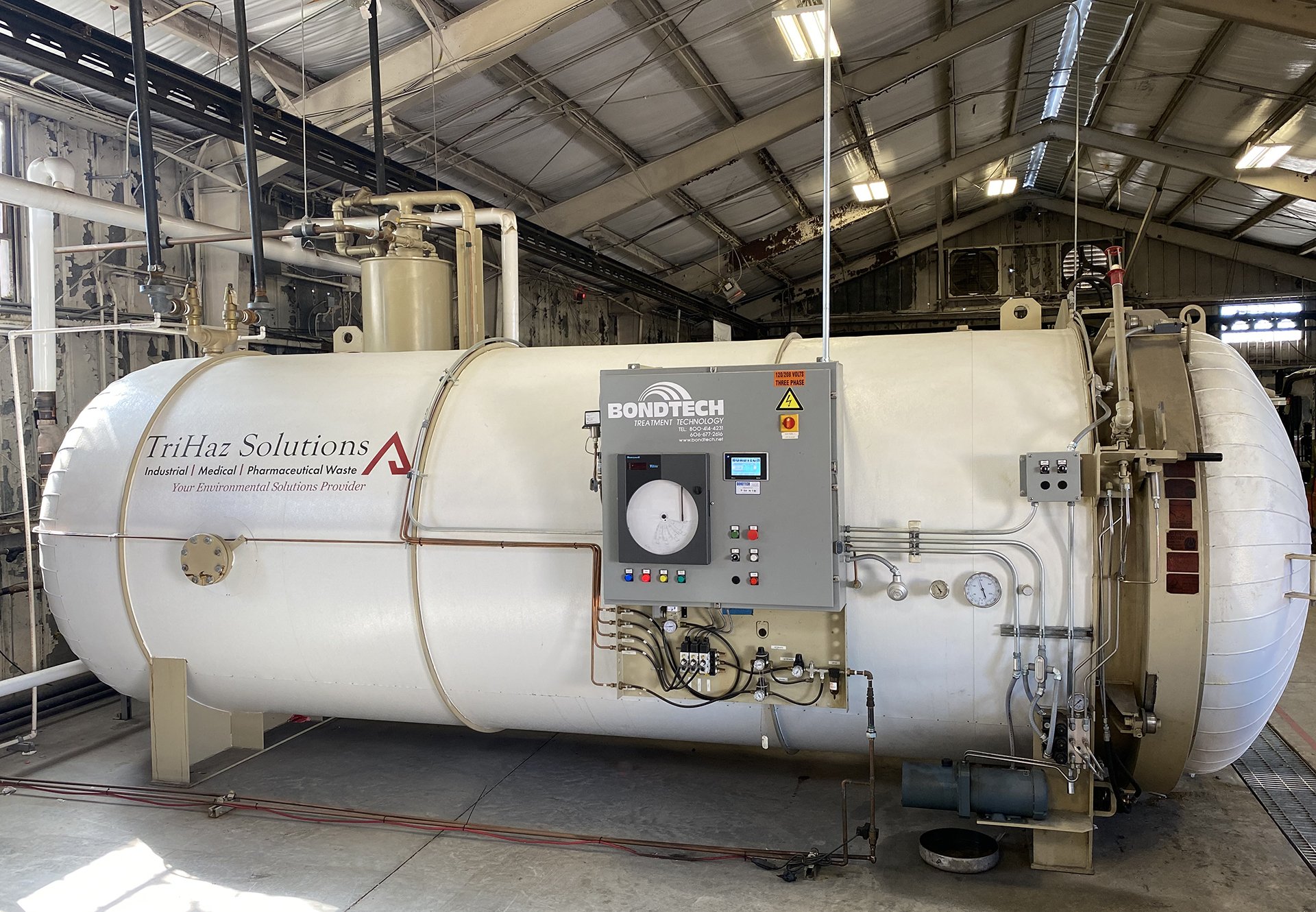
Autoclaving medical waste is an integral practice within the healthcare industry to ensure environmental safety and effective waste management. Trihaz Solutions recognizes the importance of using this sterilization technology to handle potentially hazardous medical waste responsibly. Autoclaving utilizes steam under high pressure to eliminate all biological contaminants, providing a safe, eco-friendly alternative to traditional waste disposal methods such as incineration.
What is Autoclaving?
Autoclaving is a critical sterilization technique used extensively in medical settings to ensure the safety and cleanliness of both equipment and waste materials. It employs pressurized steam to eliminate microbial life, rendering items sterile and safe for further use or disposal. This section explores the fundamental aspects of autoclaving, including its operational principles and the types of waste suitable for this process.
The Basics of Autoclaving
The basics of autoclaving involve using pressurized steam to achieve high levels of sterilization. This process typically occurs in a sealed chamber where steam is introduced at elevated pressures and temperatures. The temperature ranges from 121 to 134 degrees Celsius (250 to 273 degrees Fahrenheit). The high-pressure steam penetrates objects thoroughly, ensuring all surfaces are exposed to lethal temperatures. This exposure is crucial for effectively destroying bacteria, viruses, spores, and fungi. Autoclaving is not only used for treating medical waste; it’s also extensively used for sterilizing surgical instruments and other healthcare-related items that must be free of all microbial life before use.
Types of Waste Suitable for Autoclaving
Not all medical waste is suitable for autoclaving. The types of waste that can be effectively treated through this process generally include microbiological waste, such as cultures and stocks of infectious agents, disposable instruments used in medical procedures, and contaminated laboratory waste like Petri dishes and culture flasks. Sharps waste, such as needles and scalpels contaminated with biohazardous material, can also be autoclaved if placed in appropriate puncture-resistant containers before the process. It is essential to segregate waste containing chemical or radioactive elements, as these require different treatment methods due to their potential dangers during autoclaving.
How Does Autoclaving Work?
Autoclaving is a process that leverages the power of steam under high pressure to sterilize medical waste and equipment, ensuring they are free from infectious agents. This method involves several critical steps, including preparing and packaging items to withstand the harsh conditions inside the autoclave. Once the waste is safely enclosed, it is subjected to a steam sterilization cycle, with temperature and pressure carefully controlled to achieve maximum efficacy. The cycle includes heating, sterilization, and drying phases that eradicate all microbial life. Following the cycle, the items are cooled and can then be safely handled or disposed of. This section delves into the mechanics behind the autoclaving process, detailing each step to illustrate how this effective sterilization method functions.
The Autoclaving Process
The autoclaving process involves several key steps to ensure effective sterilization. Initially, medical waste is properly packaged and loaded into the autoclave unit. The machine is then sealed, and a sterilization cycle is initiated. Steam is injected at a high temperature and pressure for a set duration, typically 20 to 30 minutes, depending on the load and the items’ resistance to heat.
Loading the Autoclave
Careful attention is required to ensure the medical waste is prepared and packed correctly when loading the autoclave. Waste must be placed in heat-resistant bags or containers designed to withstand the autoclave’s intense conditions without melting or tearing. The arrangement of items within the autoclave is crucial for effective sterilization; items must not be overcrowded and should allow steam to circulate freely around each piece. This proper loading technique ensures the steam reaches all waste surfaces, providing uniform and effective sterilization throughout the entire load.
Sterilization Cycle
During the sterilization cycle of the autoclaving process, the autoclave is hermetically sealed, and the internal environment is controlled to reach the necessary conditions for effective sterilization. Steam is introduced at a high pressure, typically around 15 to 30 psi, and the temperature is elevated to between 121 and 134 degrees Celsius. This phase is maintained for a specific duration, usually between 15 to 30 minutes, depending on the nature and volume of the contents. This precise control of temperature and pressure is crucial as it ensures that all microorganisms present in the medical waste are destroyed, achieving the desired sterilization level.
Cooling and Drying
After the sterilization cycle, the autoclave enters the cooling and drying phase. This stage is crucial as it ensures that the items inside the autoclave are return back to a temperature where they can be safely handled while also eliminating any residual moisture that could compromise the sterility of the contents. During cooling, the pressure inside the autoclave gradually decreases, and the temperature lowers, often with the aid of a ventilation system that helps dissipate the heat. Drying is typically achieved by further application of hot air or vacuum-induced drying to ensure that all items are completely dry, maintaining their sterility and integrity before removal from the autoclave.
Post-Autoclaving Handling
Post-autoclaving handling is the final step in the sterilization process, where the now-sterilized items are carefully removed from the autoclave. This phase is critical as it ensures that the items’ integrity and sterility are maintained during removal and subsequent storage or disposal. Personnel handling these items must wear appropriate protective equipment to prevent contamination. The treated waste, now rendered non-infectious, is typically transferred to designated safe areas where it can be disposed of according to local regulations and standards. Proper handling after autoclaving minimizes the risk of recontamination and ensures the safety and effectiveness of the sterilization process.
Advantages of Autoclaving Medical Waste
Autoclaving medical waste offers several significant advantages, making it a preferred method for waste disposal companies and healthcare settings. Environmentally, it stands out as a clean process, producing no harmful emissions, unlike methods such as incineration. This fact makes it a more sustainable choice that contributes to reducing the ecological footprint of medical waste management. Regarding safety, autoclaving neutralizes hazardous biological agents effectively, significantly lowering the risk of infection and exposure for healthcare workers and waste management staff.
Environmental and Safety Benefits
The environmental and safety benefits of autoclaving are substantial, underscoring its value in medical waste management. Environmentally, autoclaving is a clean technology that avoids releasing toxic emissions into the atmosphere, unlike incineration, which can release harmful pollutants and contribute to air pollution. From a safety perspective, autoclaving eliminates biological risks by effectively destroying all pathogens in medical waste, thus protecting waste handlers and healthcare workers from potential infections. This dual advantage of being both eco-friendly and safe makes autoclaving a highly regarded method in the healthcare industry for managing medical waste responsibly.
Cost-Effectiveness
Autoclaving is not only environmentally sound and safe but also cost-effective for medical waste management. The initial investment in autoclave machinery is offset by the relatively low running costs, especially compared to other treatment methods like incineration, which require significant energy and can incur higher operational expenses due to the need for air pollution control systems. Autoclaves are durable and typically have long lifespans with minimal maintenance requirements, contributing to cost savings over time. Additionally, the process efficiently handles large volumes of waste, reducing the frequency and costs associated with waste collection and disposal.
Autoclaving Medical Waste
Autoclaving medical waste is a reliable, efficient, and environmentally friendly method crucial to safely managing hazardous materials for the healthcare industry. This process not only ensures the thorough sterilization of medical waste and equipment but also aligns with sustainable practices by avoiding the release of harmful emissions. For waste disposal companies and healthcare facilities, autoclaving technology represents a commitment to safety and environmental responsibility. This commitment is underscored by maintaining rigorous waste separation procedures and ensuring consistent autoclaving process monitoring to uphold its effectiveness and safety standards.